Music channels publish shorter videos than any other niche we track: a 2.8-minute median against an 8.3-minute average, measured across 6,801 uploads on 181 channels. That short runtime is a tell. Most of what a music channel posts is built to promote one specific song, not to build the channel around the person making it.
Forty-three ideas below split across seven formats by which job they do, the same format-first approach the full video ideas guide uses across every niche. None of the four competitor pages reviewed for this piece make the promote-versus-build split, and treating the two jobs as interchangeable is why so many musician channels stall on covers alone.
What Music Channels Publish
The table below counts every video, not a curated sample: 6,801 long-form uploads across 181 tracked music channels, everything published since January 2025.
| What we measured | Music | How that compares |
|---|---|---|
| Typical video length (median) | 2.8 min | Shortest of 14 tracked niches |
| Average video length (mean) | 8.3 min | 2.96x its own median |
| Shorts share of uploads | 37.0% | 2nd-highest of 14 niches, after beauty at 44.5% |
| Sample | 181 channels, 6,801 videos | Published since January 2025 |
Music's 2.8-minute median is not a fluke of small sample size. At 181 channels and 6,801 videos, it is the largest sample of any niche we track except vlogs, and it still lands shortest. A song, a cover, or a clip has a natural runtime set by the music itself, not by a mid-roll ad break.
The 2.96x gap between median and mean tracks with the same pattern seen in other niches: full performances, live sets, and long-form studio sessions sit inside the same sample as short covers and clips, and they pull the average well above what a typical upload looks like. Budget for a 2.8-minute video, not an 8.3-minute one.
| Format | Job it does | Best for |
|---|---|---|
| The Cover, Reimagined | Promotes the music | Search demand that already exists for the original song |
| The Story Behind the Song | Promotes the music | Turning a listener into someone invested in the catalog |
| The Real Process | Builds the channel | Trust with zero prior audience |
| Teach the Skill | Builds the channel | Authority independent of any single song |
| The Artist Off Stage | Builds the channel | Familiarity that converts casual listeners into subscribers |
| Borrowed Attention | Builds the channel | Reach beyond the channel's own audience |
| Ask, Answer, Involve | Builds the channel | Turning viewers into a community that requests more |
The Cover, Reimagined
A cover carries search demand a channel did not have to build: someone already typed the song title into the search bar. The straight version competes with every other cover of the same song; the reimagined version is the only one of its kind.
- 1. "This Song, But in a Genre It Was Never Meant For"
Take a well-known track and rebuild it in a completely different genre. The gap between the original and the reimagined version is the entire pitch. - 2. "One Instrument, the Whole Song"
Strip a full arrangement down to a single instrument and prove it still holds up. The constraint is what makes it watchable. - 3. "The Acapella Version Nobody Asked For"
Voice only, no instrumentation. Removes every place to hide, which is exactly why it demonstrates real skill. - 4. "Two Songs That Should Not Work Together, Mashed Up"
Pick two tracks with real tonal or genre tension and find the exact seam where they fit together. - 5. "The Cover Played on the Wrong Instrument on Purpose"
A song written for one instrument, performed on one that was never meant to carry it. The mismatch is the hook. - 6. "Speeding Up and Slowing Down the Same Cover"
The identical arrangement at two different tempos, played back to back, to show how much tempo alone changes the feeling of a song. - 7. "A Cover Requested by the Comments, Filmed the Same Week"
Turn a genuine, specific comment request into a video quickly enough that the commenter still remembers asking.
The Story Behind the Song
A listener who understands where a song came from is a different kind of fan than one who just streamed it once. This format works only with real specifics, a vague "here's what it means to me" does not hold attention the way a concrete writing detail does.
- 8. "The Real Event Behind This Song"
Name the specific moment that inspired a track, with enough detail that it could not apply to any other song. - 9. "The Line That Almost Did Not Make the Final Cut"
One lyric or melodic choice that nearly got cut, and the reason it survived. A small, specific decision beats a general songwriting lecture. - 10. "A First Demo Versus the Finished Track"
Play the earliest rough version next to the final release. The gap between them is the whole video. - 11. "Breaking Down Every Layer in the Mix"
Solo each instrument or vocal layer one at a time before playing the full mix, so a listener hears what usually gets buried. - 12. "Why This Song Almost Never Got Released"
The real reason a track nearly got shelved, told honestly, not as false modesty. - 13. "A Snippet Posted the Day It Was Written"
The rawest possible version of a new song, posted same-day, before it has been polished into something safer.
The Real Process
Behind-the-scenes content is the fastest trust builder available to a channel with no audience yet, because the footage already exists from doing the work. The unpolished version reads as more credible than the highlight reel, especially in a niche where a rented studio can otherwise make everyone look the same.
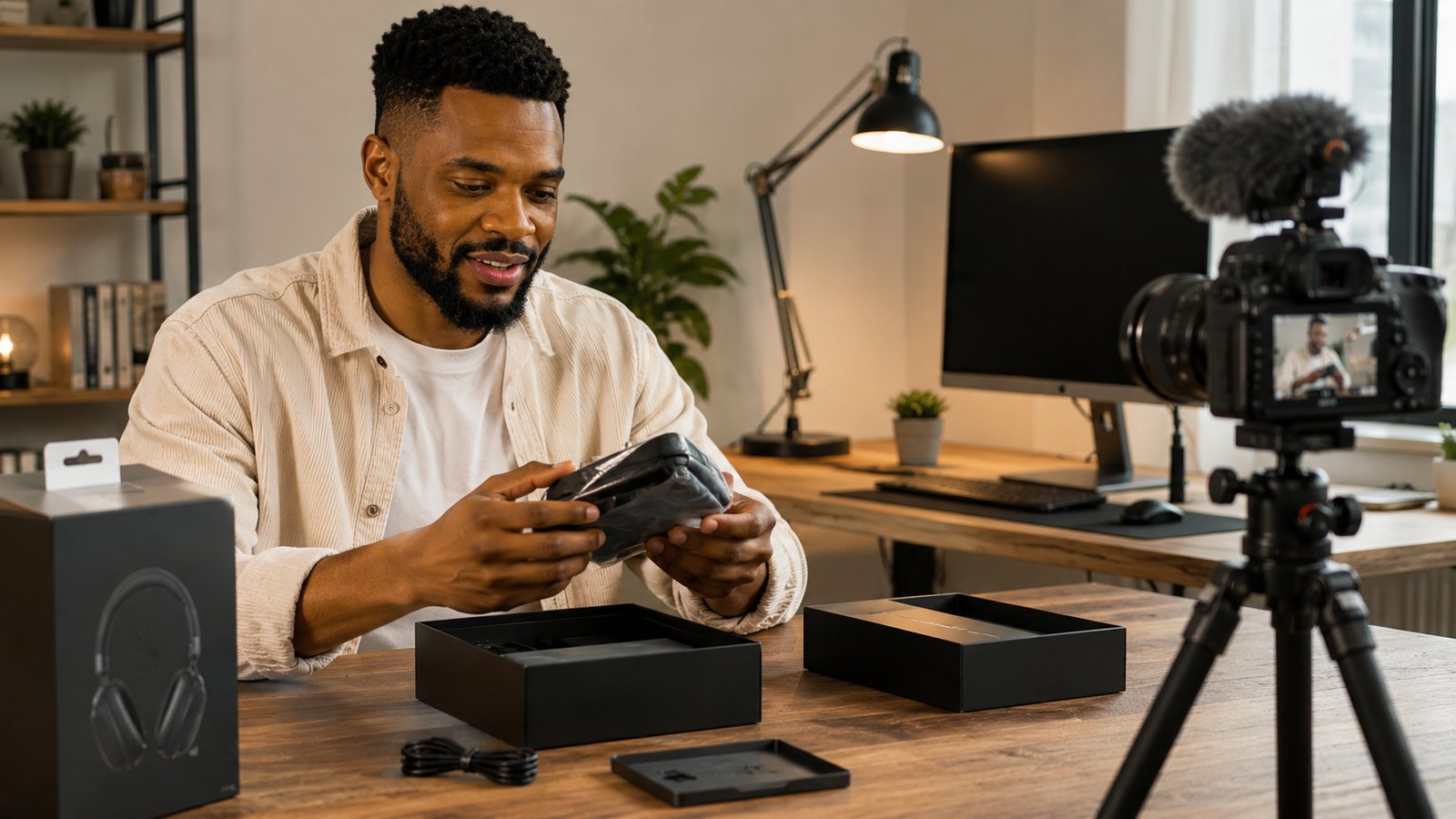
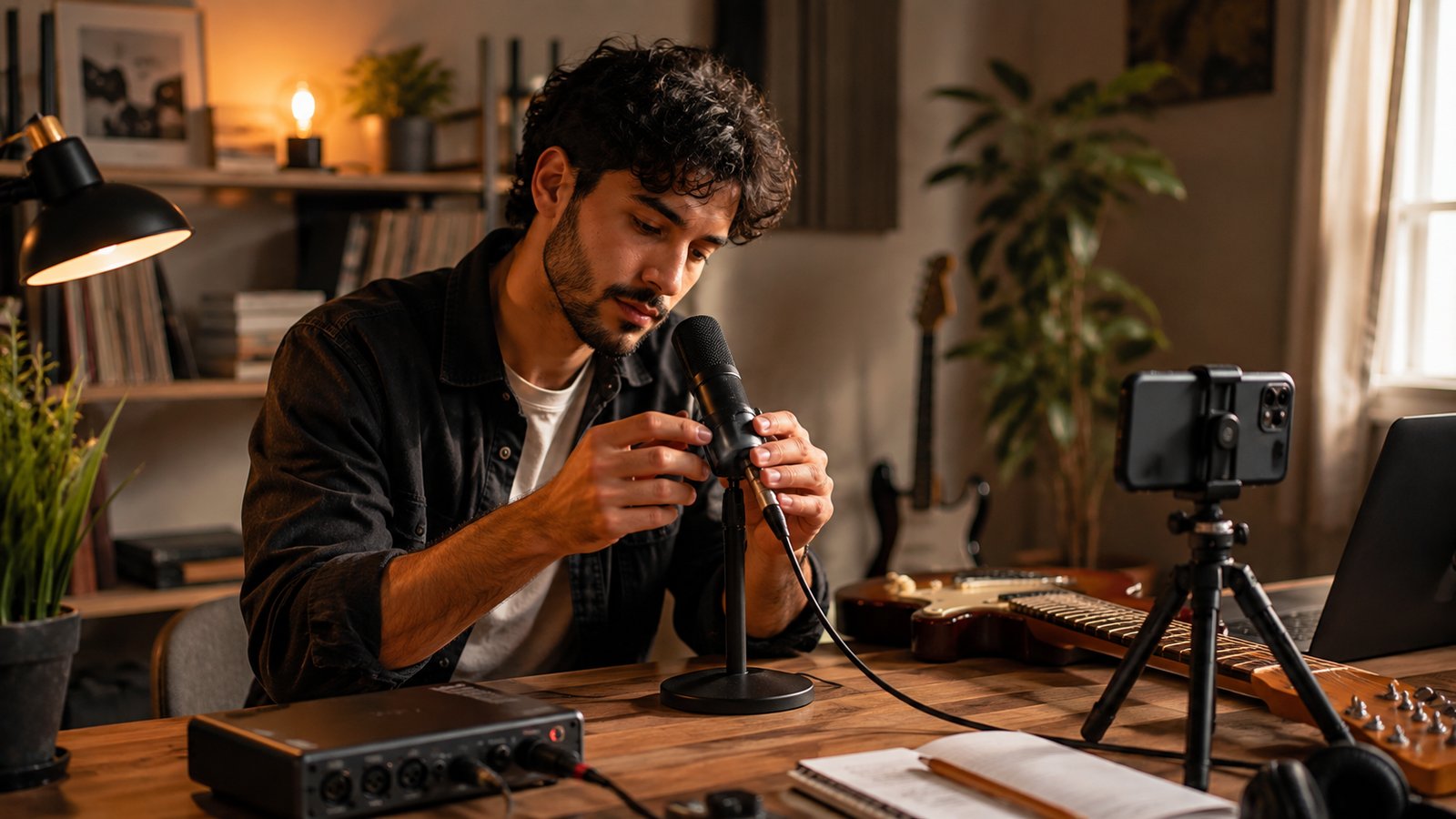
- 14. "The Actual Setup This Was Recorded On"
A real, honest gear walkthrough, including the cheap or improvised pieces, not just the parts worth showing off. - 15. "Everything That Went Wrong in This Session"
The takes that fell apart, the mistakes, the retries, left in rather than edited around. - 16. "A Full Soundcheck, Unedited"
The pre-show routine most viewers never see, filmed straight through rather than cut into highlights. - 17. "One Piece of Gear, Tested Honestly"
A single piece of equipment reviewed against a real, specific claim, not a sponsored feature tour. - 18. "Recording the Same Part Fifteen Times, All Fifteen Shown"
The repetition a finished track hides entirely, shown in full to make the real effort visible. - 19. "What This Studio Setup Cost, Line by Line"
A real, itemized budget breakdown, aimed at a viewer who assumes a decent setup costs far more than it does.
Teach the Skill
Teaching content builds authority independent of any single song, since the skill outlasts whatever track happens to be current. Narrow, specific technique beats a general lesson: a single chord voicing gets watched to the end, a full theory course gets abandoned at minute two.
- 20. "The One Technique That Changed How I Play"
A single, specific skill taught in depth rather than a broad overview of many. - 21. "Tuning by Ear, No Tuner, Step by Step"
A useful skill for anyone without access to their usual gear, taught slowly enough to follow. - 22. "The Mistake Every Beginner Makes on This Instrument"
One specific, correctable error, named and fixed on camera, more useful than a general beginner's guide. - 23. "How to Layer Harmonies That Sit Right"
A practical, technical walkthrough of a skill most tutorials only gesture at. - 24. "Building a Beat From Nothing, Every Step Shown"
A full production walkthrough from a blank project, narrated as it happens rather than reconstructed after. - 25. "The Shortcut That Only Works Once You Know the Rule"
An advanced technique framed honestly as something that requires the basics first, not oversold as a universal trick.
The Artist Off Stage
Familiarity converts a casual listener into a subscriber faster than a great song alone does, since a subscriber is following a person, not just a catalog. The narrower and more specific the moment, the more it reads as real instead of performed.
- 26. "What Tour Day Looks Like, Not the Highlight Reel"
The waiting, the driving, the setup, shown honestly instead of compressed into thirty exciting seconds. - 27. "Buying Gear on a Real Budget, Receipts Shown"
A genuine shopping trip with real prices, aimed at a viewer deciding whether a given piece of gear is worth the number on the price tag. - 28. "A Conversation in the Car About the Next Show"
Unscripted, low-production, filmed because it was already happening, not staged for the camera. - 29. "The Venue Nobody Talks About, Toured Properly"
A specific, real venue given a genuine walkthrough, more useful to other musicians than a generic tour vlog. - 30. "What Changed Since the Last Time I Filmed This Routine"
Revisit an old routine or setup video and name what changed, rather than pretending nothing did. - 31. "A Day Where Nothing Musical Happens at All"
Errands, admin, the unglamorous parts of running a music career that never make it into other channels.
Borrowed Attention
Trend and reaction content earns reach beyond a channel's existing audience by riding attention that already exists. The shelf life here is measured in days, not months, so this works as a supplement to the other six formats, not a substitute for them.
- 32. "A Viral Sound, Played Properly on a Real Instrument"
Take a trending audio clip and perform it with real musicianship instead of the phone-speaker version everyone has already heard. - 33. "The Industry News Nobody Explained Well"
A real development in the music industry, explained plainly, with the part that affects an artist's income named directly instead of buried under commentary. - 34. "Reacting to My Own Old Recordings"
Genuine self-reaction, with real commentary on what changed, more honest than reacting to someone else's work. - 35. "The Gear Myth, Tested Instead of Repeated"
Pick a widely repeated claim about equipment or technique and measure it properly instead of asserting it works. - 36. "A Week Trying the Practice Method Everyone Recommends"
Follow a popular practice technique for a real, full week and report the honest result. - 37. "Ranking Every Version of This Song, Including My Own"
An honest ranking that includes the creator's own cover in the mix, not exempted from criticism.
Ask, Answer, Involve
A channel that turns viewers into contributors builds a different kind of loyalty than one that only broadcasts. The request has to be specific enough to act on, a vague "comment your requests" produces nothing usable.
- 38. "You Requested It, I Learned It This Week"
A real, specific request turned into a video fast enough that the timeline itself is part of the story. - 39. "Interviewing Another Musician About the One Thing That Helped Them Most"
A scoped, specific interview question, more useful than an open-ended conversation. - 40. "A Live Q&A About the Business Side, Not Just the Music"
The questions other channels skip: money, contracts, burnout, the parts of a music career that are not about playing. - 41. "Grading My Own Prediction About Where a Song Would Land"
Revisit a past prediction about a release's reception and score it honestly against what happened. - 42. "Three Fans, Three Questions, Filmed on the Spot"
Unscripted answers to real questions from real people, filmed on the first take, not pre-selected softball prompts. - 43. "What I Would Tell Myself Before the First Upload"
Specific, concrete lessons for a viewer earlier in the same journey, not generic encouragement.
Frequently Asked Questions
What kind of content should a musician post on YouTube?
Split it into two jobs: content that promotes the music itself (covers, originals, live performance) and content that builds the channel around the artist as a person (behind-the-scenes, vlogs, commentary). Most musician channels lean entirely on the first and wonder why growth stalls, since the second job is what turns a one-time listener into a subscriber.
How do I go viral on YouTube as a musician?
Nothing here guarantees virality, but the formats most likely to travel are the ones with a built-in reason to share: a genre-shifted cover, a myth about gear or technique put to an honest test, or a short clip that makes sense with zero context. A polished full performance rarely spreads on its own; a 15-second moment inside one does.
What are good short-form content ideas for musicians?
Almost every format above has a natural Short cut inside it: one line of a cover, one measured claim from a gear test, one moment from a recording session. Music channels in our data run 37% Shorts, the second-highest share of any niche we track, so a Shorts-only strategy is not a compromise here, it matches how the niche already behaves.
How long should a music video be?
Our upload data puts the typical music channel video at 2.8 minutes, the shortest median of any niche we track, with an 8.3-minute average pulled up by full performances and long-form sessions. A cover or a song snippet rarely needs more than the median gives it.
Do I need a professional studio to start a music YouTube channel?
No. Covers, tutorials, and Q&A formats all run on a phone and a decent microphone. The behind-the-scenes and process formats specifically benefit from looking unpolished, since a genuinely lived-in home setup reads as more credible than a rented studio for content about how the music gets made.
Should I cover other artists' songs or only post originals?
Both, for different reasons. Covers carry existing search demand, since someone already searches for the song; originals build the catalog that makes an artist a destination instead of a jukebox. A channel that only covers never builds a distinct identity, and a channel that only posts originals loses the search traffic covers bring in.
The Song Fades. The Channel Does Not.
Every format above solves the same underlying problem: a channel that only promotes songs is only as strong as its most recent release, and a release cycle has gaps a channel still has to fill.
Start with whichever job is currently missing: promote the music if the channel has gone quiet on new releases, build the channel if every video is a cover and nothing else. A song reaches whoever is listening the week it drops. A channel reaches the same person again next month.