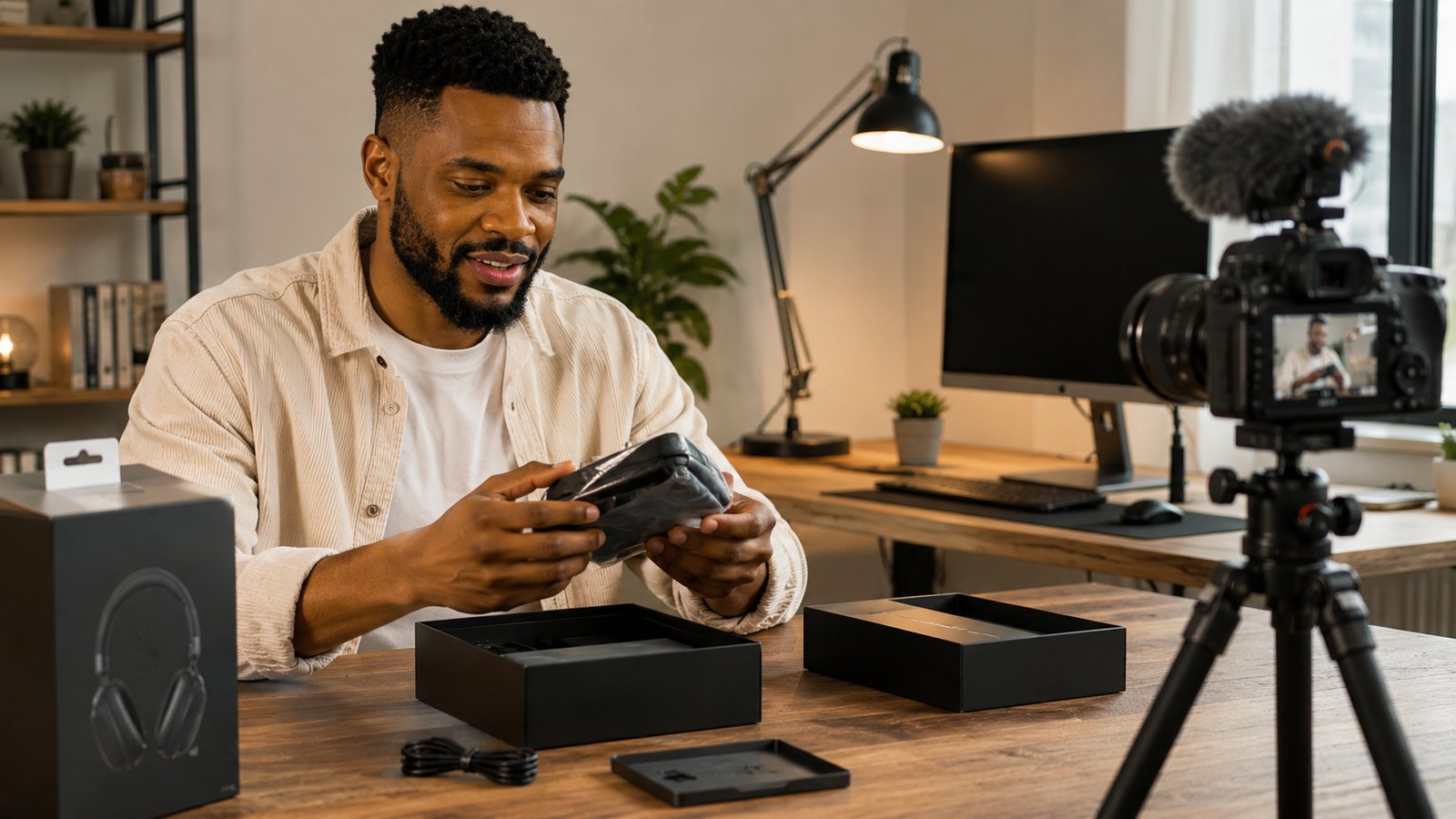
This guide sorts 111 video ideas into 15 formats, not by niche, measured against 83,423 real uploads across 14 tracked niches. Every number in the data table below comes from channels in our own database, not assumed or estimated.
Most competing lists mix niches into one undifferentiated scroll: a review idea next to a prank idea next to a gift guide, with no way to isolate the ideas that apply to one specific channel. Sorting by format instead of niche fixes that. Pick a format, then check the table below for how it runs in the niche that channel is in.
What YouTube Channels Publish, Across 14 Niches
Every number below comes from channels we track directly, filtered to uploads published since January 2025. Sorted by median length, longest to shortest.
| Niche | Median length | Mean length | Shorts share | Sample |
|---|---|---|---|---|
| Travel | 18.7 min | 20.0 min | 22.4% | 75 channels, 4,192 videos |
| Gaming | 17.9 min | 61.2 min | 20.5% | 69 channels, 4,141 videos |
| Finance | 10.1 min | 13.3 min | 24.0% | 32 channels, 2,065 videos |
| Education | 8.8 min | 28.1 min | 20.2% | 183 channels, 8,219 videos |
| Vlogs | 8.6 min | 12.6 min | 31.1% | 250 channels, 12,645 videos |
| Tech | 6.2 min | 10.3 min | 22.6% | 127 channels, 5,876 videos |
| News | 4.9 min | 23.0 min | 12.3% | 37 channels, 5,978 videos |
| Cooking | 4.7 min | 8.7 min | 20.4% | 59 channels, 3,480 videos |
| Entertainment | 3.2 min | 11.3 min | 25.1% | 141 channels, 7,909 videos |
| Sports | 2.9 min | 19.9 min | 31.0% | 141 channels, 8,513 videos |
| Music | 2.8 min | 8.3 min | 37.0% | 181 channels, 6,801 videos |
| Fitness | 2.1 min | 8.8 min | 42.4% | 65 channels, 4,236 videos |
| Comedy | 1.9 min | 11.9 min | 31.7% | 155 channels, 8,351 videos |
| Beauty | 1.3 min | 7.5 min | 44.5% | 46 channels, 2,618 videos |
Gaming's mean length runs 3.4x its own median, the widest gap in the dataset. A 17.9-minute median is what a typical gaming upload looks like; the 61.2-minute mean exists because full playthroughs and multi-hour Let's Plays sit inside the same sample as short highlight clips and pull the average far past what most uploads run.
Education shows the same pattern for the same reason: an 8.8-minute median next to a 28.1-minute mean, because full lecture-style explainers coexist with short concept videos in the same category.
Beauty and fitness are the two most Shorts-heavy niches tracked, both over 42%, close to one upload in two. News sits at the opposite end, under 13%, because breaking coverage rarely compresses into 60 seconds without losing the information that makes it useful. A format's natural runtime is a property of the niche it is filmed in, not a universal rule, which is the reason the ideas below are grouped by format but still note where runtime and Shorts fit vary by niche.
| Format | What decides the video | Best for |
|---|---|---|
| Channel Intro & Trailer | Whether a viewer knows what to expect from the channel | First impressions on a new channel |
| How-To & Tutorial | Whether the question is narrow enough to face low competition | Search traffic from the first upload |
| Review & Comparison | Whether the verdict is honest enough to trust | Purchase-intent search traffic |
| Day in the Life & Routine | How specific the role or situation is | Building familiarity before other authority exists |
| Behind the Scenes | How much of the real process gets shown | Trust-building with zero prior credibility |
| Listicle & Ranked | Whether the topic has proven search demand | High discovery-search volume |
| Explainer | Whether someone with zero background can follow it | Authority without needing to be on camera |
| Reaction & Commentary | Whether the added analysis outweighs the original clip | A distinct creator voice, lowest production barrier |
| Q&A, FAQ & Community-Powered | Whether the question is one people already ask | Turning existing demand into a content calendar |
| Before/After, Transformation & Progress | Whether the process, not just the result, gets shown | Built-in watch-time retention |
| Unboxing & Haul | What the packaging and inclusions reveal | Launch-week and early-access reach |
| Tours & Explorations | How specific the place or space is | Curiosity-driven search traffic |
| Collab, Interview & Mini-Doc | How much real expertise or story the guest brings | Reach into an audience the channel does not have yet |
| Live Streams, Ongoing Shows & Challenges | Whether the format has a name and a recognizable structure | Recurring appointments and fast, short-term reach |
Channel Intro & Trailer
A channel trailer is the only video every visitor to a channel page sees before anything else, which makes it worth more filming attention than its length suggests.
- 1. "Who I Am and What This Channel Covers"
A direct trailer under two minutes: who the channel is for, what gets posted, how often. One clear promise outperforms a life story. - 2. "Why I Started This Channel"
The real motivation behind starting, specific enough that a viewer can tell whether their own reason for watching lines up with it. - 3. "What You Will Not See on This Channel"
A trailer built around exclusion instead of inclusion, telling a viewer exactly what this channel will not waste their time on. - 4. "The Channel Trailer, Filmed After Ten Uploads Instead of Before the First"
A trailer built from real footage already shot, showing what the channel looks and sounds like instead of just promising it. - 5. "One Year In: What Changed Since My First Trailer"
Revisit the original trailer and name what the channel became versus what it set out to be. - 6. "The Channel Rules I Follow Before Filming Anything"
A short video naming the actual editorial standards behind the channel, useful trust-building content that doubles as a trailer.
How-To & Tutorial
How-to content pulls search traffic from the first upload because it answers a question someone is already typing, with zero dependency on existing subscribers or algorithmic reach. The narrower the question, the lower the competition: "how to fix a slow laptop without buying a new one" faces a fraction of the competition "how to speed up a computer" does, and still carries real monthly search volume.
- 7. "How to [Specific Task] When You Only Have [Specific Constraint]"
Any general tutorial narrowed by a real constraint, no gym, no budget, no experience, competes for a fraction of the search volume its broad version does. - 8. "The Setting Everyone Gets Wrong When They First Try This"
A tutorial built around the single most common mistake, more specific and more searchable than a generic walkthrough. - 9. "How to Do This With What You Already Own"
A tutorial that explicitly rules out buying anything new, aimed at a searcher trying to avoid spending money to solve a problem. - 10. "The Five-Minute Version of a Task That Usually Takes an Hour"
A speed-focused tutorial for the searcher who wants the fast path, not the thorough one. - 11. "How to Undo [Common Mistake]"
A repair-focused tutorial, fixing a mistake instead of preventing one, a distinct and often less-covered search angle. - 12. "A Complete Beginner's Walkthrough, Filmed Like You've Never Done This Before"
A tutorial that assumes zero prior knowledge, filling the gap most advanced tutorials skip past. - 13. "The Tool or Method I Switched To, and Why the Old One Wasn't Working"
A tutorial framed as a genuine switch, which carries more credibility than a tutorial framed as a first recommendation. - 14. "Step by Step, With Every Mistake Left In"
An unedited-feeling tutorial showing real missteps and corrections, which reads as more trustworthy than a tutorial with every stumble cut. - 15. "How to Teach This to Someone Else"
A tutorial about teaching the skill, not just performing it, a genuinely underused angle for any niche with a real technique at its core.
Review & Comparison
Review content pulls high-intent search traffic because the viewer has already decided to spend money and is only deciding on what. Comparison videos outperform standalone reviews for a new channel, since fewer creators cover a specific two-way matchup in depth than cover either product alone.
- 16. "[Product] Versus [Product], Same Budget, One Winner"
A direct comparison within the same price tier, removing price as a variable so the verdict is about the product alone. - 17. "I Used This for [Real Timeframe], Here's the Honest Verdict"
A genuine post-use review instead of a first-impression review, catching problems a launch-week review structurally cannot. - 18. "The Free Version Versus the One You Pay For"
A direct comparison between a free tool or product and its paid rival, tested honestly enough to say when the free version wins. - 19. "What the Marketing Promises Versus What It Delivers"
A review built around the gap between advertised claims and real performance, with the specific gap named, not just implied. - 20. "Three Options for the Same Job, Ranked by the Job They're Hired For"
Compare three products or services solving the identical problem and rank them on the job, not the spec sheet. - 21. "The [Category] I Regret Buying"
A genuine regret review, rarer than it should be because most channels only cover what they were sent or chose to keep. - 22. "Is [Popular Product] Worth the Hype"
A review testing a specific hyped claim against real use, structured as a verdict, not a feature tour. - 23. "The Budget Version Versus the Expensive One, Same Task"
Two price tiers tested on the identical task, letting the price difference argue its own case. - 24. "What I Would Buy Instead, If I Were Starting Over"
A review reframed as a do-over, naming what experience changed about the original decision.
Day in the Life & Routine
Day-in-the-life content requires no expertise and no existing audience to perform, because the draw is relatability, not authority. The more specific the role or situation, the more directly it connects to a real searchable identity: a day in the life of a freelance designer targets a specific viewer far more precisely than a generic "my daily routine" video does.
- 25. "A Day in the Life of [Specific Role, Not a General One]"
The narrower the role, the more precisely it targets a real search identity: a nursing student, a remote contractor, a first-year teacher. - 26. "My Actual Morning Routine, No Product Placement"
A routine video explicit about what is genuinely used daily versus what only exists for the camera. - 27. "What My Routine Looked Like a Year Ago Versus Now"
A routine comparison over time, showing what changed and why, more substantial than a single static routine video. - 28. "The Routine I Tried and Abandoned Within a Week"
An honest failed-routine video, rarer than the standard success-routine format and more trust-building for it. - 29. "A Day in the Life During [Specific High-Stress Period]"
A routine filmed during a genuinely demanding stretch, deadline week, exam season, peak workload, instead of an average day. - 30. "What I Do in the First and Last Ten Minutes of the Day"
A tightly scoped routine video instead of the full day, easier to film and more specific than a generic routine. - 31. "Shadowing Someone Else's Routine for a Day"
A day-in-the-life format applied to someone other than the creator, opening a collaboration angle within the same format. - 32. "My Weekend Routine, Since Nobody Covers That"
Most routine content defaults to weekdays; a weekend-specific version fills a real, rarely covered gap.
The vlog ideas guide covers this format in full depth, including travel, food, and voiceover-driven variants for creators who would rather not talk to camera the whole runtime.
Behind the Scenes
Behind-the-scenes content has a built-in low production barrier: the footage is captured while already working, with no separate concept to develop or extra filming day required. For a channel with nothing else to show yet, the process of building the channel is itself the content.
- 33. "The Real Process Behind [What This Channel Makes]"
An honest process video, the workflow, the tools, the actual time it takes, not a highlight reel of the finished result. - 34. "Everything That Went Wrong Making the Last Video"
A behind-the-scenes video built entirely around mistakes and fixes, more engaging than a clean process walkthrough. - 35. "My First Attempt at [Skill], on Camera, Unedited"
Documenting a genuine first attempt at something the channel is still learning, honest in a way a polished tutorial cannot be. - 36. "What My Workspace Looks Like Before It Gets Cleaned Up for Camera"
A real, unstaged workspace tour, contrasted implicitly against the curated version most creators show. - 37. "How Long This Takes, Timed From Start to Finish"
A behind-the-scenes video built around a real, measured time cost, more concrete than a vague "it takes a while." - 38. "The Decision I Almost Made Differently"
A process video centered on one real decision point and the reasoning behind it, rather than a full walkthrough. - 39. "A Compilation of Behind-the-Scenes Clips I Never Posted"
Raw clips saved but never published, compiled into their own video once enough accumulate.
Listicle & Ranked
Top 5 and Top 10 formats match how people naturally phrase discovery searches, which makes them structurally search-friendly regardless of niche. Ranking items instead of just listing them adds real watch time: a viewer stays to see where their favorite lands.
- 40. "Top [Number] [Specific Category] Under [Specific Constraint]"
A listicle scoped by a real constraint, price, time, size, targets a specific searcher instead of a generic browser. - 41. "The [Category] Nobody Talks About But Should"
A listicle built around genuine under-coverage, differentiated from the dozens of "best of" lists covering the same obvious picks. - 42. "Ranking Every [Item in a Bounded Set], Worst to Best"
A complete ranking of a finite, real set, which reads as more authoritative than a "some of the best" list. - 43. "[Number] Things I Wish I Knew Before Starting"
A ranked list of genuine lessons learned, credible because it comes from real experience rather than research alone. - 44. "The Most Overrated [Category], Ranked"
A contrarian ranking, naming what is popular but weaker than its reputation, a distinct angle from a standard best-of list. - 45. "[Number] [Category] Tested Side by Side, Ranked by the Result"
A ranked list backed by a real test rather than opinion alone, closer to a comparison than a pure listicle. - 46. "The Cheapest to the Most Expensive [Category], Is the Price Difference Worth It"
A price-ordered ranking that answers a real buying question instead of just listing options. - 47. "[Number] Mistakes That Ruin [Common Task], Ranked by How Often They Happen"
A mistake-focused ranked list, more actionable than a generic tips list because it is ordered by real frequency.
Explainer
Explainer content builds authority without requiring personality or on-camera comfort, since screen recordings, voiceover, and simple graphics can carry the entire video. Narrow explainers beat broad ones on competition alone: "how index funds work for someone with zero investing experience" faces far less competition than "how the stock market works."
- 48. "[Complex Topic], Explained for Someone With Zero Background"
An explainer that states its assumed knowledge level upfront and holds to zero, the narrowest and least competitive framing. - 49. "The One Concept That Makes Everything Else in This Topic Click"
An explainer built around a single load-bearing concept rather than an exhaustive overview. - 50. "Why This Keeps Happening, Explained at the Root"
A recurring frustration explained at the cause level instead of offering another workaround. - 51. "The Buzzword Everyone Uses and Nobody Defines"
One overused term in the niche, defined properly and specifically, in under five minutes. - 52. "What Changes If [Common Assumption] Is Wrong"
An explainer that questions a widely held assumption in the niche and works through the real consequence. - 53. "The Explainer Built From the Questions Left Unanswered in the Comments"
Mine comment sections of established channels for unanswered questions and build an explainer around the gap. - 54. "How [Process] Works, Step by Step"
A mechanism explainer, breaking down how something functions rather than what it is or why it matters. - 55. "The History of [Topic], and Why It Ended Up This Way"
An origin-focused explainer, using context to make a present-day concept make more sense.
Reaction & Commentary
Reaction and commentary content carries one of the lowest production barriers on this list: a camera, a genuine opinion, and something worth responding to. The value is in the added analysis, not the reaction itself, since a viewer watching a reaction wants a perspective they cannot get from the original content alone.
- 56. "My Honest Take on [Current Debate in the Niche]"
A commentary video on a real, ongoing debate rather than a single fading trending moment, which gives it a longer search life. - 57. "Responding to the Advice Everyone in This Niche Gives"
Commentary that pushes back on widely repeated niche advice, distinct because it argues instead of agreeing. - 58. "What I Got Wrong When I First Started"
Self-directed commentary, reacting to one's own past mistakes with the benefit of hindsight. - 59. "Reacting to [Content] With More Commentary Than Playback"
Genuine reaction content structured so original commentary outweighs the reacted-to material, both a stronger video and the legally safer version under fair use. - 60. "The Take I Have That Most People in This Niche Disagree With"
A contrarian-position commentary video, building a distinct creator voice by taking and defending a real stance. - 61. "Grading My Own Prediction From a Year Ago"
Revisiting a past prediction and scoring it honestly, including the parts that missed, rarer than making a new prediction.
Q&A, FAQ & Community-Powered
Q&A and FAQ content removes the hardest part of planning: the questions already exist, and the job is finding and answering them better than anyone else has. Every niche has a set of questions repeated across forums, comments, and search, and a channel that systematically answers them builds a library covering every entry point a new viewer might have.
- 62. "The [Number] Questions I Get Asked Most, Answered Properly"
Compile the genuinely recurring questions from comments and forums and answer them in one video, each answer then repurposable as its own Short. - 63. "Answering the Questions Google Already Associates With This Topic"
Build a Q&A directly from "People Also Ask" results for the niche's core keywords, real search demand made visible. - 64. "A Debate, Both Sides Argued Honestly"
A structured debate format where the creator argues both real positions, more substantive than a one-sided rant. - 65. "You Submitted the Topics, Here's What I Found"
An audience-submission video, crowdsourcing topic selection directly instead of guessing at demand. - 66. "The Poll Results, and Why the Winning Answer Surprised Me"
A poll-driven video that treats the result as a real finding worth discussing, not just a gimmick. - 67. "The Question I Get Asked That I Still Don't Have a Great Answer For"
An honest, unresolved-question video, rare and more credible than pretending every question has a confident answer. - 68. "Rapid Q&A, One Sentence Answers Only"
A speed-format Q&A, a distinct rhythm from the standard long-form answer video and a natural Shorts source. - 69. "Answering the Same Question Two Different Ways for Two Different Situations"
A single question answered conditionally, showing that the "right" answer depends on context most FAQ content ignores.
Before/After, Transformation & Progress
Transformation content carries a built-in reason to keep watching: the viewer clicks to see the result and stays through the process to get there. The process footage is what separates a strong transformation video from a weak one; jumping straight from before to after skips the part that builds investment in the outcome.
- 70. "My [Specific Timeframe] Progress, Documented Honestly"
A real progress video with the setbacks left in, not just the wins, filmed with the before state captured before starting, not recreated after. - 71. "The Transformation That Didn't Go as Planned"
An honest transformation video where the result fell short of the goal, rarer and more trust-building than a clean success story. - 72. "Same Starting Point, Two Different Approaches, Compared"
Two transformation methods run in parallel from the identical starting condition, turning a transformation into a comparison too. - 73. "A Time-Lapse of the Whole Process, With the Key Moments Explained"
Compressed footage of a long process with narrated context at the decision points, not just sped-up silent footage. - 74. "Revisiting a Transformation One Year Later"
A follow-up to a past transformation, checking whether the result held, closing a loop most transformation content never revisits. - 75. "The Cheapest Possible Version of This Transformation"
A budget-constrained transformation, aimed at a viewer who assumes the result requires more money than it does. - 76. "Weekly Progress Updates, Compiled Into One Video"
Short recurring updates stitched into a single longer retrospective once the transformation concludes. - 77. "What I Would Do Differently, Now That It's Done"
A post-transformation reflection video, adding a layer past the standard before-and-after reveal.
Unboxing & Haul
An unboxing has one genuine narrative advantage: the moment before anyone, including the person filming, knows exactly what is inside. What a company includes and what it leaves out tells a viewer something a spec sheet cannot.
- 78. "Unboxing [Product], Full Contents Ranked by What Gets Used"
Rank every included item honestly instead of walking through each one as if all of them matter equally. - 79. "The Packaging Alone, as Its Own Video"
Treat the box and unboxing sequence as the subject, a quiet signal of how much was spent on experience versus product. - 80. "A Haul, But Only the Items Worth Keeping Make the Final Cut"
A curated haul video that openly excludes weaker purchases instead of showcasing everything bought. - 81. "Unboxing Something Hard to Find, With the Story of Tracking It Down"
An early-access or rare unboxing paired with the sourcing story, adding a layer beyond the contents themselves. - 82. "Setting It Up With the Instructions Turned Face Down"
Attempt setup without reading the manual, showing honestly where design succeeds or forces giving in and reading it. - 83. "The Haul I Returned Almost Everything From"
An honest post-haul follow-up naming what got returned and why, closing a loop most haul content never closes.
Tours & Explorations
Tour and exploration content works because it satisfies a viewer's curiosity about a place, space, or setup they cannot easily access themselves. Specificity is what separates a searchable tour from a generic one: a workspace tour built around one real constraint beats a workspace tour that is just a walkthrough.
- 84. "My Actual Setup, and Why Each Piece Earned Its Spot"
A setup or workspace tour with a stated reason for every item, not a gear list read off a spec sheet. - 85. "A Tour of [Specific Place], the Parts Nobody Shows"
A location tour built around the overlooked corners instead of the obvious highlights every other tour covers. - 86. "What This Costs to Visit or Access, Line by Line"
A tour paired with a real cost breakdown, answering the budget question most tour content skips. - 87. "The Tour I Filmed Before and After a Major Change"
A before-and-after tour of the same space, combining the tour format with the transformation format. - 88. "A Local's Guide to [Place], Not the Tourist Version"
An insider-angle tour, positioned explicitly against the generic tourist-guide version of the same content. - 89. "Everything That Went Wrong on This Trip or Visit"
A tour built around what failed rather than a polished highlight reel, more memorable and more honest. - 90. "Comparing Two Versions of the Same Kind of Place"
Two comparable locations or spaces toured back to back, turning a tour into a comparison.
Collab, Interview & Mini-Doc
Collaboration and interview content brings a second voice into a channel, which widens reach into an audience the channel does not already have. A specific, well-chosen guest matters more than a famous one: someone with genuine expertise or a genuine story outperforms a bigger name with nothing new to say.
- 91. "Interviewing Someone Who Does [Job/Skill] for a Living"
A real-expertise interview, more credible and more searchable than a generalist take on the same topic. - 92. "A Collaboration Where We Each Try the Other's Format"
A format-swap collab, giving both creators' audiences a reason to watch instead of a straightforward joint appearance. - 93. "A Short Documentary on [Specific Person, Place, or Process]"
A mini-documentary scoped tightly enough to complete without a full production budget. - 94. "Interviewing Someone With the Opposite Opinion"
A deliberately adversarial-but-respectful interview, more engaging than an interview where both sides agree. - 95. "What This Person Wishes They Knew Before Starting"
An interview scoped around lessons learned, a specific, answerable question rather than an open-ended chat. - 96. "A Joint Video Where Both Channels Answer the Same Question Separately"
A parallel-answer collab format, letting two creators' perspectives be compared directly. - 97. "Following Someone Through One Real Task, Start to Finish"
A mini-documentary structured around a single bounded task rather than an open-ended profile.
Live Streams & Ongoing Shows
Live and episodic formats build a different kind of relationship with an audience than a single upload does, since the appeal is a recurring appointment, not a one-time video. A show needs a name and a recognizable structure to earn repeat viewers, not just a recurring topic.
- 98. "A Weekly Recurring Show With Its Own Name and Format"
A named, structured recurring segment, easier for a viewer to subscribe to mentally than an unnamed series of similar videos. - 99. "A Live Q&A, Announced a Week in Advance"
A scheduled live session with advance notice, giving an audience time to prepare real questions instead of a spontaneous stream with low turnout. - 100. "A Podcast-Style Conversation, Clipped Into Standalone Shorts After"
Long-form conversational content designed from the start to be cut into multiple short pieces, one recording producing several uploads. - 101. "Live, Working Through a Real Task in Real Time"
A live stream built around genuine unscripted work rather than open-ended chat, giving viewers a reason to stay for the outcome. - 102. "A Recurring News or Update Roundup for the Niche"
A regularly scheduled roundup of what changed in the niche that week, building a habit-forming reason to check back. - 103. "An Ask-Me-Anything, Streamed and Later Cut Into Individual Answer Clips"
A live AMA that doubles as raw material for a full slate of short-form answer videos afterward.
Challenge & Trend Remix
Challenge and trend content earns fast, short-term reach by riding an existing wave of attention rather than starting from zero. The shelf life is genuinely shorter than every other format on this list, so this works best as a supplement to a channel's other formats, not its foundation.
- 104. "The Trending Challenge, Given a Real Twist Specific to This Niche"
A generic viral challenge adapted with a genuine niche-specific angle instead of copied as-is. - 105. "[Timeframe] Challenge, Documented Honestly Including the Days It Didn't Go Well"
A self-imposed challenge with the failures left in, more credible than a challenge video with only the wins shown. - 106. "Trying the Method Everyone in This Niche Swears By, for a Full Week"
A trend-testing format applied to a popular claim, reporting the honest result rather than assuming it works. - 107. "The Challenge Where the Constraint Is the Whole Point"
A challenge defined entirely by one hard constraint, budget, time, tools, that forces genuine creativity. - 108. "Remixing a Trending Format Into Something Specific to This Channel's Niche"
Taking a viral structure from an unrelated niche and translating it directly into this one. - 109. "A Group Challenge, Everyone Films Their Own Attempt Separately"
A multi-creator challenge format, each participant's video standing alone while still cross-referencing the others. - 110. "The Challenge I Would Not Attempt Again, and Why"
An honest post-challenge verdict, naming what was not worth repeating, rare and trust-building. - 111. "Grading a Trend a Year After It Peaked"
Revisiting a trend once its moment has passed, assessing what held up versus what was hype.
How to Find Ideas This List Does Not Cover
Every idea above has a shelf life. Niches evolve, search trends shift, and today's specific angles get covered by enough creators that competition eventually increases. The skill that compounds is not memorizing a list. It is knowing how to generate new ones independently.
Three research methods hold up consistently:
- YouTube autocomplete: Type a niche topic into the search bar and work through every autocomplete suggestion. Each one is a real query with real demand behind it, and the more specific the suggestion, the lower the competition. The Keyword Explorer pulls live search volume on these phrases before filming.
- Competitor gap analysis: Study three to five growing channels in the niche for what they are not covering. A competitor gap analysis turns the holes in a rival's content library into real opportunities, since a topic they skip is a search their audience is making without finding a satisfying answer.
- Cross-niche pattern tracking: A format performing well in one niche often translates directly to an adjacent one with a different angle. The data table above is a starting point for spotting which niches share a runtime and Shorts profile, and which formats might carry over between them.
The Video Ideas and Competitor Analysis tools in YTGrowth pull real data from competing channels and surface the specific topics and title patterns they are leaving open, turning a manual research process that takes hours into something doable before the next upload.
What to Check After the First Ten Videos
Ten videos is the first checkpoint with enough data behind it to inform a real decision instead of a guess. In YouTube Studio, three signals matter more than the rest:
- Which videos pulled the most search impressions: this names the topics YouTube already associates with the channel, worth building on directly instead of starting a new topic from zero.
- Which videos held attention longest: average view duration is the clearest format-fit signal available. A channel where how-to content holds 60% and vlogs drop to 30% is being told which format its specific audience wants.
- Which videos converted the most subscribers per view: views are the vanity number early on; subscriber conversion is what determines whether a channel compounds or stalls.
This is also the point where a full Channel Audit earns its cost, a structured read on where SEO, CTR, retention, and content strategy stand against real channels in the same niche, and what to prioritize fixing before the next upload.
Frequently Asked Questions
What should my first YouTube video be?
A channel trailer works as a true first upload, but the first video that pulls real search traffic is usually a narrow how-to or review, something with real, specific search demand behind it. "How to fix a slow laptop without buying a new one" beats "how to speed up a computer" on competition alone. Waiting for a perfect first idea delays the only thing that generates real data: an upload with real analytics attached to it.
How do I come up with more video ideas once this list runs out?
Three methods hold up consistently: YouTube autocomplete, competitor gap analysis, and cross-niche trend tracking. Work through every autocomplete suggestion for a niche topic, study three to five growing competitor channels for what they are not covering, and track which formats are gaining traction in adjacent niches before they arrive in yours. All three are covered in more depth in the research section of this guide.
What YouTube content works best?
There is no single answer across every niche, which is the reason format-versus-niche fit matters more than chasing whichever format is trending. Review and comparison content pulls the highest purchase-intent search traffic across most niches; listicle and ranked content pulls the highest raw search volume; challenge and trend content pulls the fastest short-term spikes with the shortest shelf life.
How long should a YouTube video be?
It depends entirely on the niche and the format, which is exactly what the data table in this guide is for. Travel and gaming content runs long by default (17 to 19 minute medians), beauty and comedy run short (around 1.5 minutes), and forcing a format into a runtime the niche does not support costs more in retention than it gains in ad breaks.
Do I need expensive equipment to start a YouTube channel?
No. Review, explainer, Q&A, and reaction formats all run on a phone and, in several cases, no camera at all. The equipment budget matters far less than picking a format with real search demand behind it. A well-lit phone video answering a real question outperforms a polished video answering a question nobody is asking.
How many videos should I post before changing my content strategy?
Ten is the first meaningful checkpoint. It is enough data in YouTube Studio to compare which topics pulled search impressions, which formats held attention longest, and which converted viewers into subscribers, so the next ten videos are built on evidence instead of a guess.
Should Shorts be part of a new channel's strategy?
Yes, and the right share depends on the niche: beauty and fitness channels in our data run 42 to 45% Shorts, while news channels run under 13%. A Short does not need a separate concept. Almost every format above has a natural short-form cut inside it, a single tip, a single verdict, a single reaction moment.
How is this different from a niche-specific video ideas guide?
This guide covers formats that work across any niche: how-to, review, listicle, explainer, and eleven more. If a channel already has a clear niche, gaming, tech, cooking, comedy, or music, the dedicated guide for that niche goes deeper on formats and ideas specific to it, using the same measured-data approach.
A Format Outlives Any Single Video
Every idea in this guide solves the same underlying problem: a channel that treats each video as a one-off runs out of ideas long before it runs out of an audience worth keeping. A format does not run out the way a single topic does, because it is a repeatable shape, not a single answer.
Start with whichever format matches what already exists: a how-to if there is a real skill worth teaching, a review if there is a product already owned, a day-in-the-life if the routine itself is worth documenting. The topic runs out eventually. The format is what a viewer keeps coming back for.
Which Niche Guide to Read Next
Every format above works across niches, but a channel with a clear niche already gets more out of a guide that goes deeper on that specific one, using the same measured-data approach as the table earlier in this piece.
- Gaming Video Ideas, the format-first approach for the platform's most crowded category, measured against our tracked gaming upload data.
- Tech Video Ideas, built around the review-unit head start bigger channels get on every launch, and the formats that do not depend on being first.
- Cooking Video Ideas, six formats that outlast any single recipe, measured against thousands of real cooking uploads.
- Comedy Video Ideas, format-first sketch and skit ideas for a niche where a single viral clip rarely repeats itself.
- Music Video Ideas, split between formats that promote the music itself and formats that build the channel around the artist.
- Vlog Ideas, the full day-in-the-life menu beyond routines: travel, food, and voiceover-driven variants.
- Shorts Ideas, turning existing long-form footage into a second discovery channel instead of a separate production.
- Challenge Video Ideas, for once a channel is ready to film something bigger than a single-format upload.