Every week, thousands of new YouTube creators type the same thing into Google: "free subs on YouTube." They land on websites promising hundreds of subscribers overnight, enter their channel URL, and wait. Some see the numbers climb. Then YouTube runs a purge, and the count drops back down. For some channels, the damage goes further than lost numbers.
The frustration behind that search is real. Growing a channel from zero feels slow, and the gap between where you are and the 1,000-subscriber monetization threshold can feel impossible to close without help. That desperation is exactly what subscriber generators and sub-for-sub schemes are built to exploit.
Here is what those services will never tell you: the only free YouTube subscribers worth having are the ones the algorithm sends you. This guide shows you the six-step roadmap to get there, without putting your channel at risk.
The 'Free Subscriber' Trap: Why Generators and Sub4Sub Will Kill Your Channel
When you submit your channel URL to a subscriber generator, you are not receiving real people. You are receiving bot accounts and fake profiles that YouTube's audit system is specifically designed to detect, and the consequences of that decision can follow your channel for a long time.
Warning: Using any subscriber generator, sub-for-sub exchange, or subbot service is a direct violation of YouTube's Terms of Service. The risks are not theoretical.
The pursuit of instant free subscribers does not accelerate your growth. It puts everything you have already built at risk, and no number of fake followers is worth what you stand to lose. Risks include:
- Subscriber purges. YouTube regularly audits accounts and wipes fake subscribers in bulk, often leaving your count lower than before you started.
- Shadowbanning. Your content stops appearing in search results and recommendations without any notification from YouTube.
- Permanent termination. Repeated or severe violations can result in your channel being removed entirely, with no reliable appeals process.
- Zero watch time. Fake accounts never watch your videos, which tanks your engagement signals and tells the algorithm your content is not worth promoting.
Step 1: Use YouTube Shorts to Trigger the 'Fast-Track' Growth Loop
YouTube Shorts is the single most powerful free tool available to creators who want to grow fast. Unlike long-form videos, which take time to rank and build an audience, Shorts get distributed immediately to non-subscribers through a dedicated feed. The Subscribe button sits directly on the video as viewers watch, which means every Short you publish is a live conversion opportunity reaching people who have never heard of your channel.
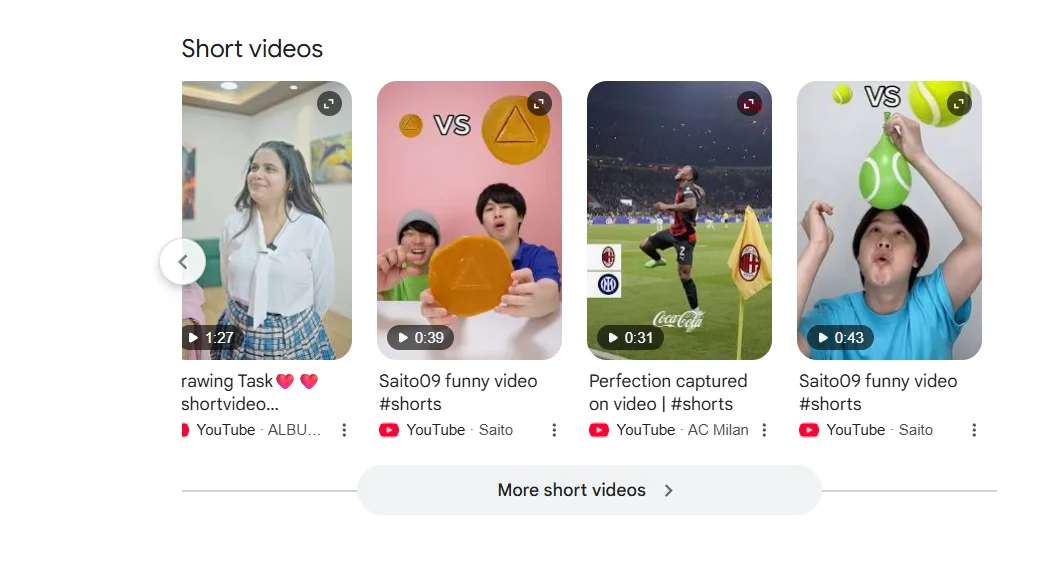
The Value Loop
The Value Loop is the creative framework that separates Shorts that gain subscribers from Shorts that just get views. The structure is straightforward: open with a question or a problem your target viewer already has, deliver the content in the middle, and hold the answer or payoff until the very end. This keeps viewers watching all the way through, and high retention tells the algorithm your content is worth pushing to a larger audience.
Here is how to execute it:
- Open with a hook that poses a direct question or challenge relevant to your niche.
- Build tension through the middle by delivering value incrementally, never the full answer upfront.
- Place the resolution or payoff in the final three seconds to maximize complete views.
- End with a natural verbal or visual cue that invites the viewer to subscribe for more.
Posting Frequency Matters. Publish 3 to 5 Shorts per week to maximize your reach and give the algorithm enough content to identify and promote your channel consistently.
The retention signal generated by the Value Loop compounds over time. The more Shorts you publish using this structure, the stronger your channel's algorithmic profile becomes, and the faster YouTube starts sending your content to new audiences organically.
Step 2: Optimize Your Channel's Value Proposition for Search (SEO)
Views are the prerequisite for subscribers, and most views on YouTube start with a search. If your channel is not optimized to appear when your target audience is looking for content, you are leaving your biggest source of free growth untouched. SEO is not just for Google. It is the foundation of every channel that grows consistently without spending money on promotion.
The Formula: "I help [Target Audience] do [Benefit]." Build every channel trailer, about section, and video description around this structure so that a first-time visitor understands your value within seconds of landing on your page.
Keyword Research
The goal is to find search terms that have a healthy volume of monthly searches but low enough competition that a newer channel can realistically rank for them. YTGrowth's Keyword Explorer is built specifically for this, surfacing low-competition, high-volume YouTube keywords so you can make targeting decisions based on data rather than guesswork.
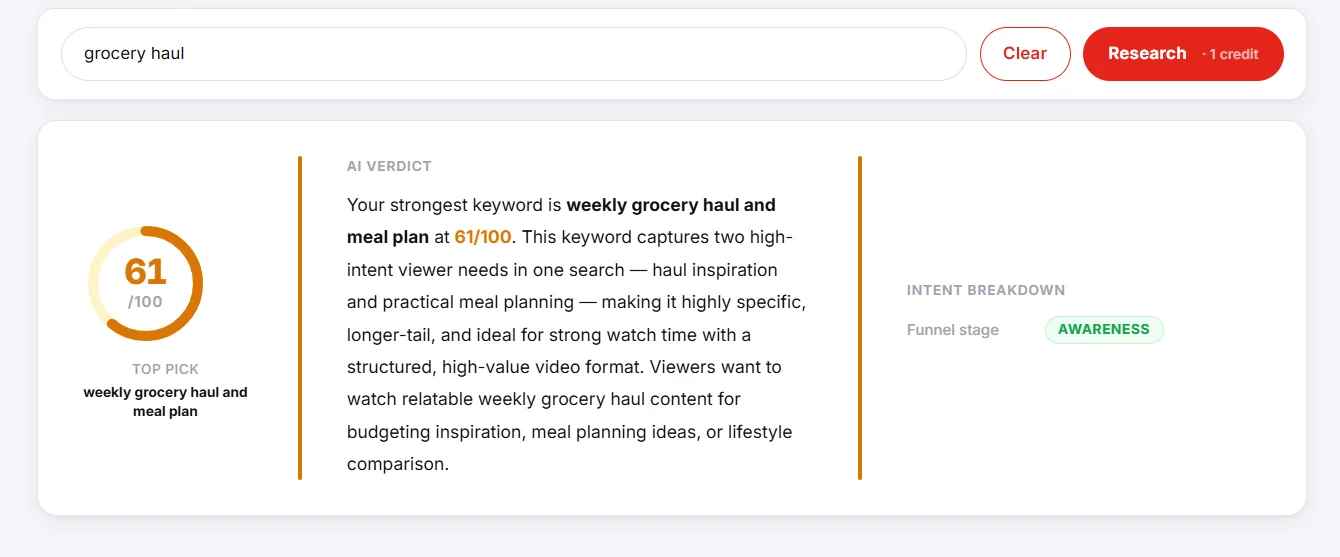
The channels that reach 1,000 subscribers fastest are almost always the ones titling their videos around what people are searching for, not around what sounds creative.
Tools to use for keyword research:
- Keyword Explorer for finding low-competition keywords with real demand.
- SEO Studio for title and description optimization against the live YouTube niche.
About Section
Your channel's About section is indexed by YouTube's search algorithm and it needs to work for you. Write it using the same keywords you are targeting in your videos, and lead with your value proposition formula. A viewer who lands on your channel page and immediately understands who you help and what they will learn is far more likely to subscribe than one who reads a vague bio with no clear direction. The YouTube SEO primer covers how the metadata layer feeds the algorithm at the channel level.
Evergreen content compounds over time in a way that trending or reactive videos never will. A well-optimized how-to video published today can continue pulling in new subscribers six, twelve, even eighteen months from now, and that is the kind of free growth that no generator can replicate or sustain.
Step 3: Master the 'Power CTA' to Convert Viewers Before They Leave
Most creators ask for subscribers in the wrong place. The standard approach is to drop a "don't forget to subscribe" at the end of the video, but by that point, 80% of viewers have already left. You are delivering your most important ask to the smallest possible slice of your audience, and the ones still watching are already your most loyal viewers anyway.
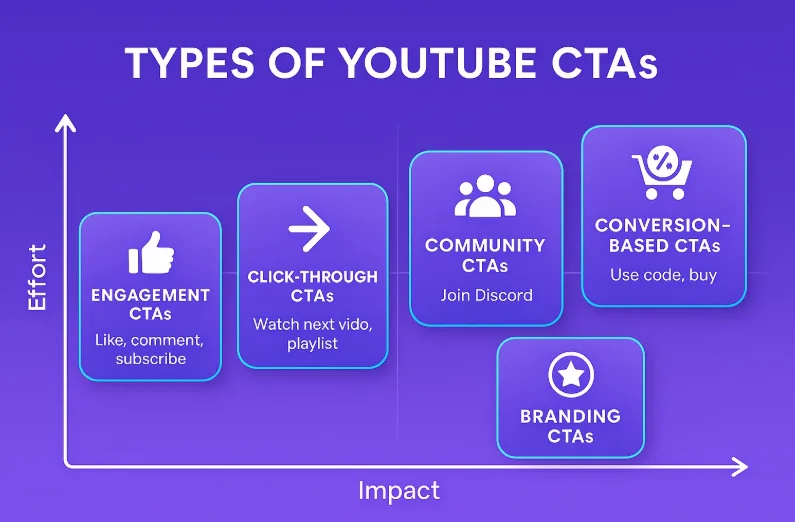
YouTube Reports: 80% of viewers have already left by the end of the video. Place your CTA immediately after the first 'win,' not after the outro.
| Old Way | New Way |
|---|---|
| CTA at the end of the video | CTA after the first value delivery |
| "Subscribe to my channel" | "Subscribe so you never miss X" |
| Asking as a favour | Framing it as a benefit to the viewer |
The viewer's highest point of engagement is immediately after you have given them something useful. That is the moment to ask, not after the outro music starts playing.
The Pivot: Place your CTA at the 2-minute mark, right after your first win. That is where attention is highest and the viewer has just received enough value to trust you.
The phrasing matters as much as the timing. "Subscribe to my channel" puts the benefit on you. "Subscribe so you don't miss the next part of this series" puts the benefit on the viewer. One feels like a request, the other feels like an invitation, and that difference shows up directly in your results over time.
Step 4: Design High-CTR Thumbnails Using the Curiosity Gap
You cannot get free YouTube subscribers without first getting views, and thumbnails are the primary driver of views. Before anyone decides to watch your video, they see your thumbnail. It is the first and sometimes only impression your content makes, and a weak one means your video never gets the chance to convert anyone into a subscriber. CTR is the gatekeeping metric here, and the 2026 SEO blueprint covers the specific 6% threshold that flips the algorithm into Suggested distribution.
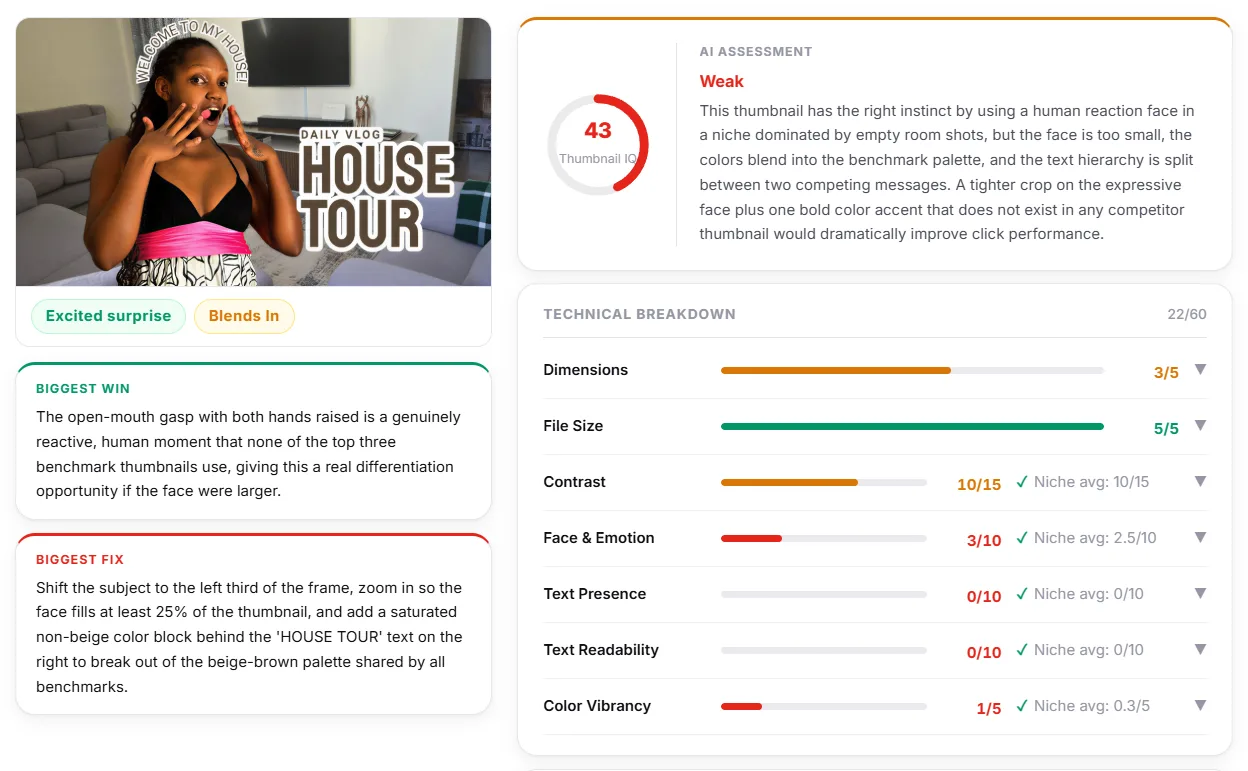
Thumbnail design rules to follow:
- Use high-contrast color pairings like blue/orange or yellow/black to stand out in a crowded feed.
- Keep thumbnail text to three words maximum. More than that becomes unreadable at small sizes.
- Make sure your thumbnail complements the video title rather than repeating it word for word.
- Never use a thumbnail that gives away the answer. Create a question, not a conclusion.
Thumbnails with three words or less generate higher CTR than text-heavy designs, making the 3-Word Rule one of the most data-backed principles in YouTube optimization.
The Gap Technique
The Curiosity Gap is the space between what the thumbnail shows and what the viewer needs to watch the video to find out. A thumbnail that creates a question in the viewer's mind that only the video can answer is doing its job correctly. If the thumbnail and the title together tell the full story, there is no reason to click.
A strong thumbnail does not describe the video. It interrupts the scroll, creates an open loop in the viewer's mind, and makes clicking feel like the only way to close it. That single principle is responsible for more organic views than any posting schedule or hashtag strategy ever will be.
Score your next thumbnail in 30 secondsThumbnail IQ runs face detection, contrast checks, and a curiosity-gap read against your niche. Free to try.Try Thumbnail IQ →Step 5: Build a Community Signal Through Strategic Engagement
Every interaction you have with your existing audience sends a signal to the algorithm that your channel is worth introducing to a new one.
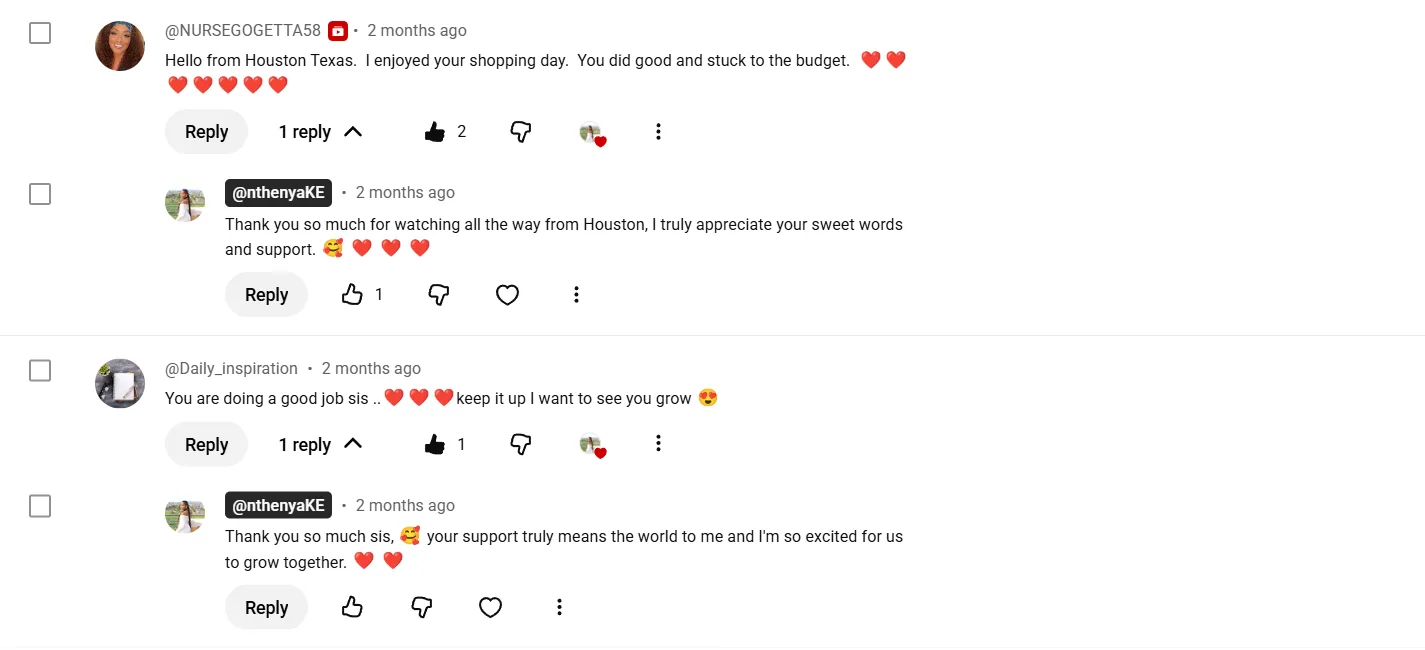
- The Hearting Hack. When you Heart a comment on your video, YouTube sends that commenter a specific notification pulling them back to your channel. That return visit increases the likelihood of a subscription, and it costs you nothing but a single click.
- The Question Reply Strategy. When someone leaves a comment, reply with a follow-up question instead of a simple thank you. This reopens the conversation, doubles the comment volume on that video, and tells the algorithm your content is generating genuine engagement worth amplifying.
- The Community Tab. You do not need a massive following to start building real connections. Use the Community Tab to post polls, behind-the-scenes updates, and questions between uploads. Early engagement there signals an active, invested audience long before your subscriber count reflects it.
When you Heart a comment, the user receives a specific YouTube notification, increasing the likelihood of them returning to your channel and subscribing.
The creators who gain subscribers consistently are not always the ones publishing the most content. They are the ones treating every comment section as a conversion opportunity, because the algorithm cannot distinguish between organic reach and engagement-driven reach. It simply promotes what people are responding to.
Step 6: Create 'Binge-Watching' Funnels With Power Playlists
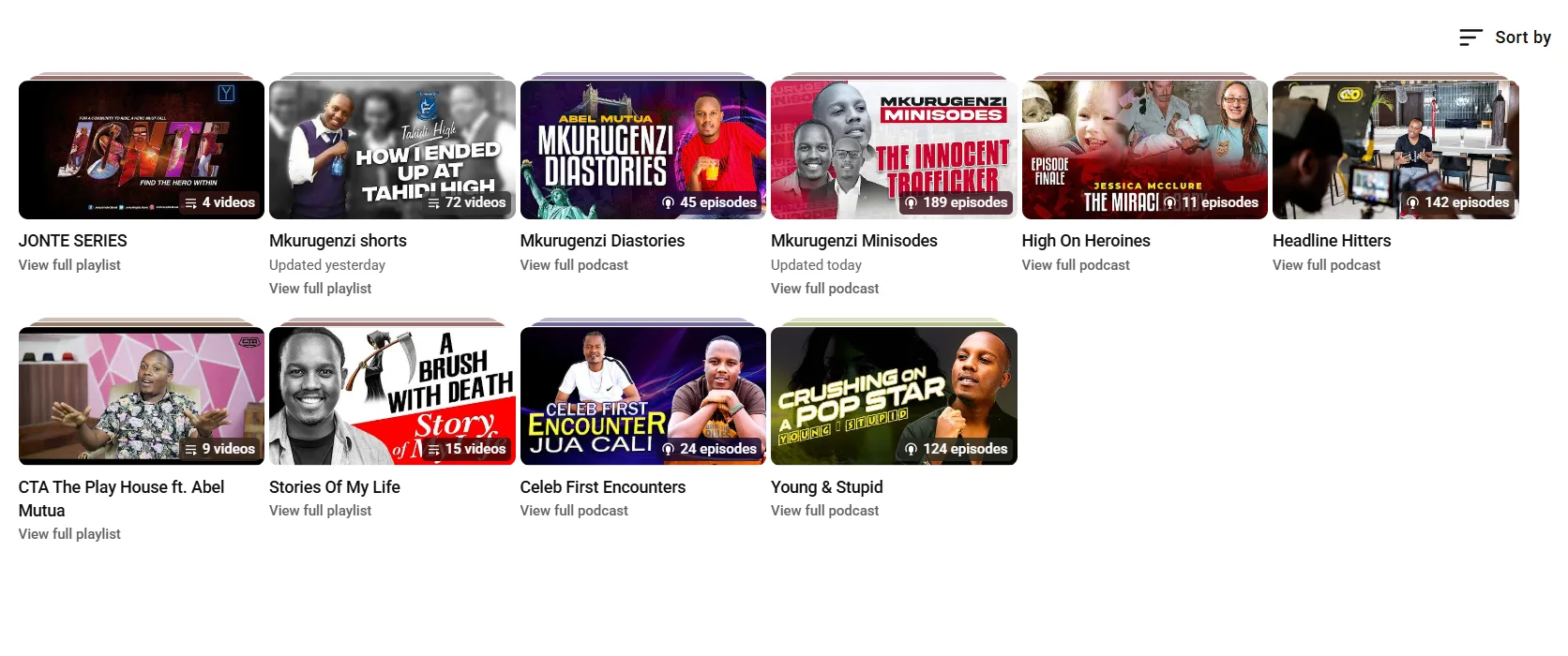
Most creators upload videos as standalone pieces and hope viewers find more. Power Playlists flip that approach by organizing your content into tightly themed sequences that pull viewers from one video directly into the next, increasing session duration and giving the algorithm a much stronger signal to promote your channel.
The Strategy
The key is specificity. A playlist titled "YouTube Growth Tips" is too broad. A playlist titled "How to Get Your First 1,000 Free YouTube Subscribers in 90 Days" targets a viewer at a specific stage with a specific goal, and they are far more likely to keep watching. Automatic playback does the rest, extending session duration without requiring any additional action from the viewer.
A viewer who watches three of your videos in a row is 75% more likely to subscribe than someone who watches just one.
The psychology behind this is straightforward. A viewer who has watched three of your videos has already made a repeated decision to stay. By the third video, trust is established, familiarity is built, and subscribing feels like the natural next step rather than a commitment to a stranger. Power Playlists engineer that sequence deliberately, and for any creator trying to hit 1,000 free YouTube subscribers, they are one of the most underleveraged tools available.
Work With the Algorithm, Not Against It
The path to 1,000 free YouTube subscribers has always been the same. It just requires patience, consistency, and a willingness to work with the algorithm rather than against it. Every step in this guide, from Shorts to Power Playlists, is built around giving YouTube exactly what it needs to promote your channel to a wider audience for free.
The temptation to reach for a YouTube subscriber generator is understandable. Growth feels slow at the start, and the gap between zero and 1,000 can feel impossible to close. But the subbot risks are not worth it. Purged subscribers, shadowbanned content, and terminated channels are the real outcomes of that shortcut, and no milestone is worth losing everything you have built to reach it faster.
The six steps in this guide are not theoretical. They are the same mechanics that YouTube's algorithm rewards every single day. Stack them consistently, use YTGrowth to sharpen your SEO and thumbnail strategy, and the subscribers will follow.
Once you cross 1,000 subscribers, the next milestone is monetization. The YouTube Partner Program guide walks the path from there to your first paycheck.