The creator economy is no longer a side hustle conversation. YouTube pays out billions annually to creators, and the barrier to entry has never been more accessible. But thousands of creators are still stuck below the monetization threshold, not because they lack talent, but because they lack a strategy.
The biggest misconception about how to monetize your YouTube channel is that it is purely a volume game. Post enough, wait long enough, and the money will come. That thinking is what keeps most creators in the valley of death, grinding out content with no clear path to a first paycheck.
What makes the YouTube Partner Program different today is its structure. Monetization is no longer a single all-or-nothing threshold. It is a two-tiered progression that gives creators a realistic early win before they hit full ad revenue status. This guide breaks down both tiers and gives you the Bridge Strategy, a specific framework for hitting the numbers faster than the standard approach ever will.
Step 1: Meet the Tier 1 Eligibility (Fan Funding)
Tier 1 is the entry point that most monetization guides skip entirely. It is the fastest way to get monetized on YouTube before you hit the heavier thresholds, and for a beginner creator, reaching it first is one of the most important psychological wins you can give yourself early in the journey.
To qualify for Tier 1, you need to meet all of the following:
- 500 subscribers
- 3 public video uploads
- 3,000 public watch hours in the last 365 days OR 3 million Shorts views in the last 90 days
- Two-Step Verification enabled on your Google account
- No active Community Guidelines strikes
Pro Tip: Tier 1 requires 500 subscribers and 3,000 public YouTube watch hours in the last 365 days, or 3 million Shorts views in the last 90 days.
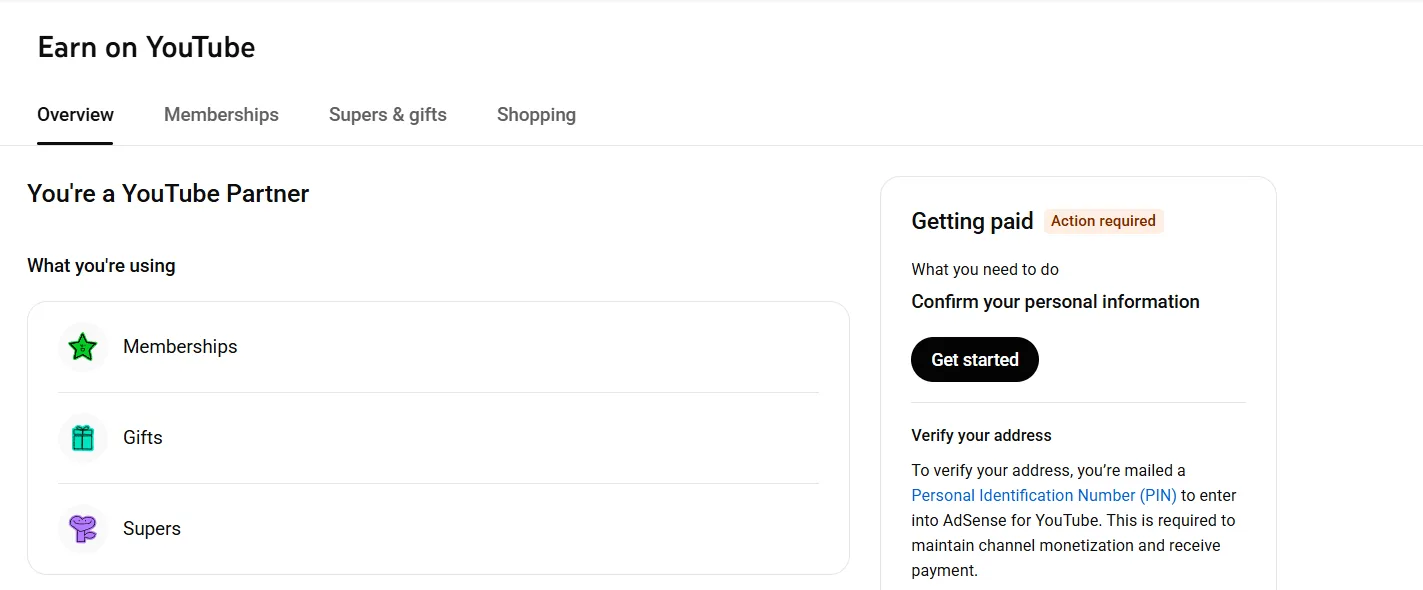
Note the distinction between the two pathways. The watch hour window is 365 days, giving you a full year to accumulate. The Shorts views window is only 90 days, which means volume and consistency matter significantly more if you choose that route. If you are still building toward 500 subscribers, our organic roadmap to your first 1,000 subs covers exactly how to stack that growth.
What you get at Tier 1:
- Super Chat. Viewers can pay to have their messages highlighted during live streams.
- Super Thanks. Viewers can tip directly on individual videos.
- Channel Memberships. Offer paid monthly memberships with exclusive perks to your audience.
These features matter because they represent real income that is entirely independent of ad revenue. A creator with 600 subscribers and an engaged audience can generate meaningful revenue through memberships and Super Thanks long before they ever see an AdSense payment. Tier 1 is not a consolation prize. It is a legitimate monetization stage that rewards creators who build genuine communities early, and reaching it should be treated as a milestone worth pursuing deliberately.
Step 2: Unlock Full Ad Revenue (Tier 2 Requirements)
Tier 2 is the gold standard of YouTube monetization. It is where ad revenue kicks in, where your content starts generating passive income at scale, and where the platform begins treating you as a serious creator. The hurdles are higher, but so is the payoff.
Pro Tip: Full monetization requires 1,000 subscribers and either 4,000 public YouTube watch hours in the last 365 days, or 10 million Shorts views in the last 90 days.
| Requirement | Tier 1 | Tier 2 |
|---|---|---|
| Subscribers | 500 | 1,000 |
| Watch Hours | 3,000 in 365 days | 4,000 in 365 days |
| Shorts Alternative | 3M views in 90 days | 10M views in 90 days |
| Uploads Required | 3 | No minimum |
| Ad Revenue | No | Yes |
| Super Chat & Memberships | Yes | Yes |
The 4,000 watch hour requirement is where most creators stall. It sounds manageable until you realize that Shorts views do not count toward it. Every view accumulated through the Shorts feed is tracked separately and cannot be applied to your long-form watch hour total.
This is the single most misunderstood aspect of the YouTube monetization requirements 2026, and it catches creators off guard when they assume their Shorts traction is accelerating their path to full ad revenue.
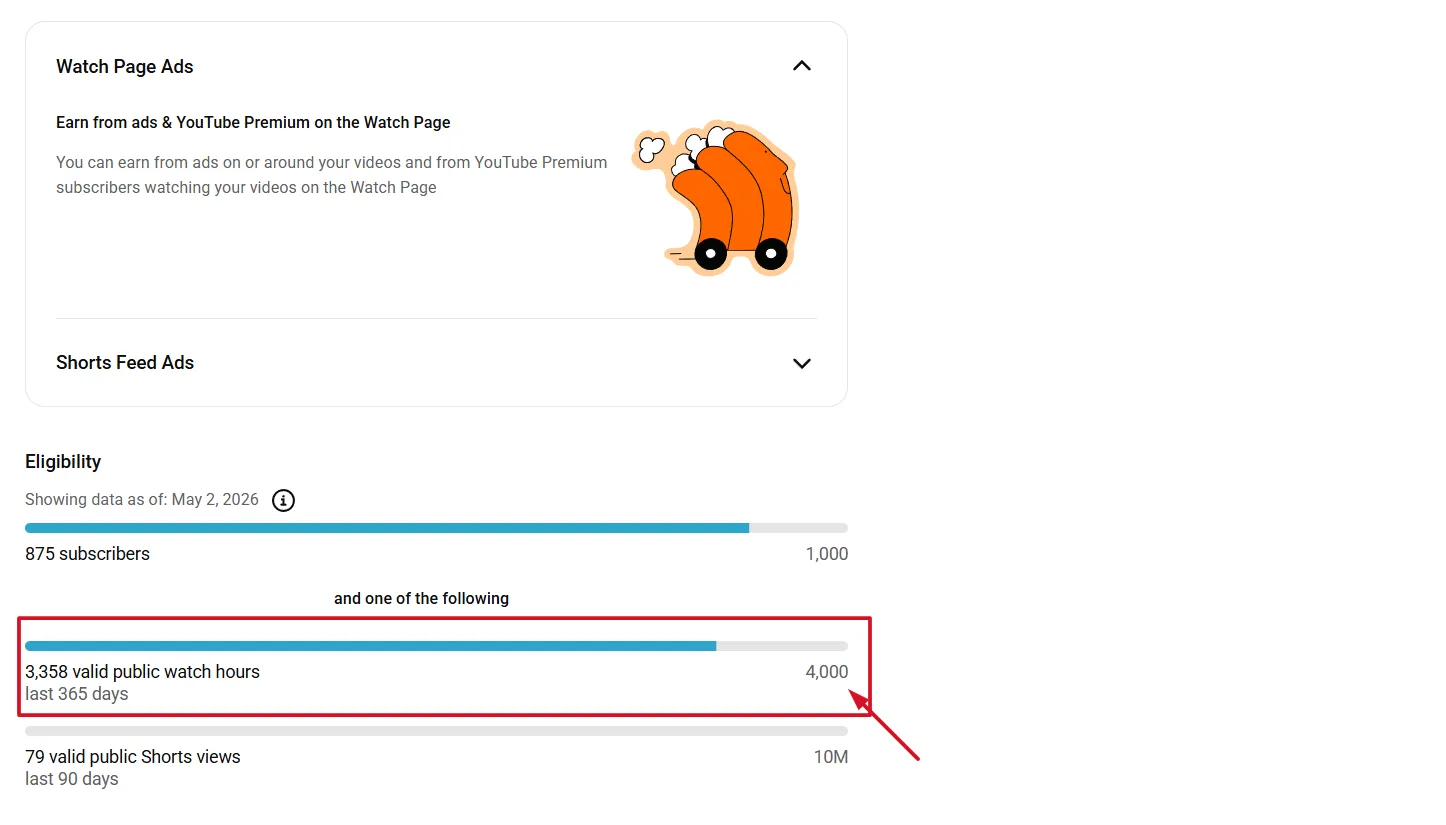
Once you clear Tier 2, YouTube's revenue sharing model activates on two fronts. Watch Page Ads generate income from pre-roll, mid-roll, and display ads running against your long-form videos. The YouTube Shorts monetization model pools ad revenue from the Shorts feed and distributes it based on each creator's share of total views. Both streams compound over time as your library grows.
Step 3: Implement the 'Bridge Strategy' for Rapid Growth
Most beginner creators pick one format and commit to it entirely. They either go all-in on Shorts chasing reach, or they publish long-form videos waiting for watch hours to accumulate. Both approaches fail in isolation because each format solves a different problem, and you need both problems solved simultaneously to hit Tier 2.
| Format | Role | Strength | Weakness |
|---|---|---|---|
| YouTube Shorts | Subscriber engine | High reach, fast distribution | Low watch time, 90-day window |
| Long-form video | Watch time engine | High retention, compounds over time | Low initial reach |
The Bridge Strategy treats these two formats as a single system rather than separate content tracks. Shorts bring in the subscribers. Long-form videos accumulate the watch hours. Neither format carries the full weight alone, and together they cover every requirement on the Tier 2 checklist.
Here is how to execute it:
- Publish 3 to 5 Shorts per week targeting your niche with high-retention Value Loop structures. These build your subscriber count toward the 1,000 threshold while feeding the algorithm consistent signals about your content category.
- Publish one to two long-form videos per week optimized around searchable keywords in your niche. These are your watch hour generators, and every minute a viewer spends on them counts directly toward your 4,000-hour target.
- Add End Screens to every Short directing viewers to your most recent or most relevant long-form video. This is the bridge itself, converting Shorts viewers into long-form watch time without requiring them to search for your content separately.
Pro Tip 1: YouTube's algorithm prioritizes Average View Duration (AVD). Use pattern interrupts every 15 to 30 seconds in your long-form videos to maintain retention and maximize the watch time each view generates.
Pro Tip 2: Use YouTube Shorts to gain subscribers and long-form videos to gain YouTube watch hours. The two formats are not interchangeable. They are complementary.
The Bridge Strategy works because it stops treating monetization as a single finish line and starts treating it as two parallel races being run at the same time. Creators who understand this hit their YouTube monetization requirements 2026 significantly faster than those who do not.
Score every long-form title against your live nicheSEO Studio runs a 6-dimension rubric across SEO, CTR, hook, and length, then rewrites it to win. Free to try.Try SEO Studio →Step 4: Navigate the YouTube Studio & Compliance Check
Meeting the subscriber and watch hour thresholds gets you to the door. What you do inside YouTube Studio monetization determines whether you walk through it. Many creators hit the numbers and still get rejected because of technical oversights and policy violations that are entirely avoidable.
Here is how to find and submit your application:
- Desktop. Go to studio.youtube.com, click 'Earn' in the left sidebar, and follow the prompts to begin your YPP application.
- Mobile. Open the YouTube Studio app, tap 'Earn' at the bottom of the screen, and select 'Apply Now' when your thresholds are met.
- Enable Two-Step Verification on your Google account before applying. Without it, YouTube will not process your application regardless of your metrics.
Warning: Reused Content is the number one reason YPP applications get rejected. YouTube defines reused content as videos that repurpose clips from movies, other creators, or third-party sources without significant original commentary or transformation. Compilation channels, reaction videos with minimal input, and slideshow videos with no original narration all fall into this category. You cannot monetize low-effort content, and submitting an application with it on your channel will result in an immediate rejection. The related inauthentic content policy applies the same originality bar to mass-produced and templated videos, AI-made or not.
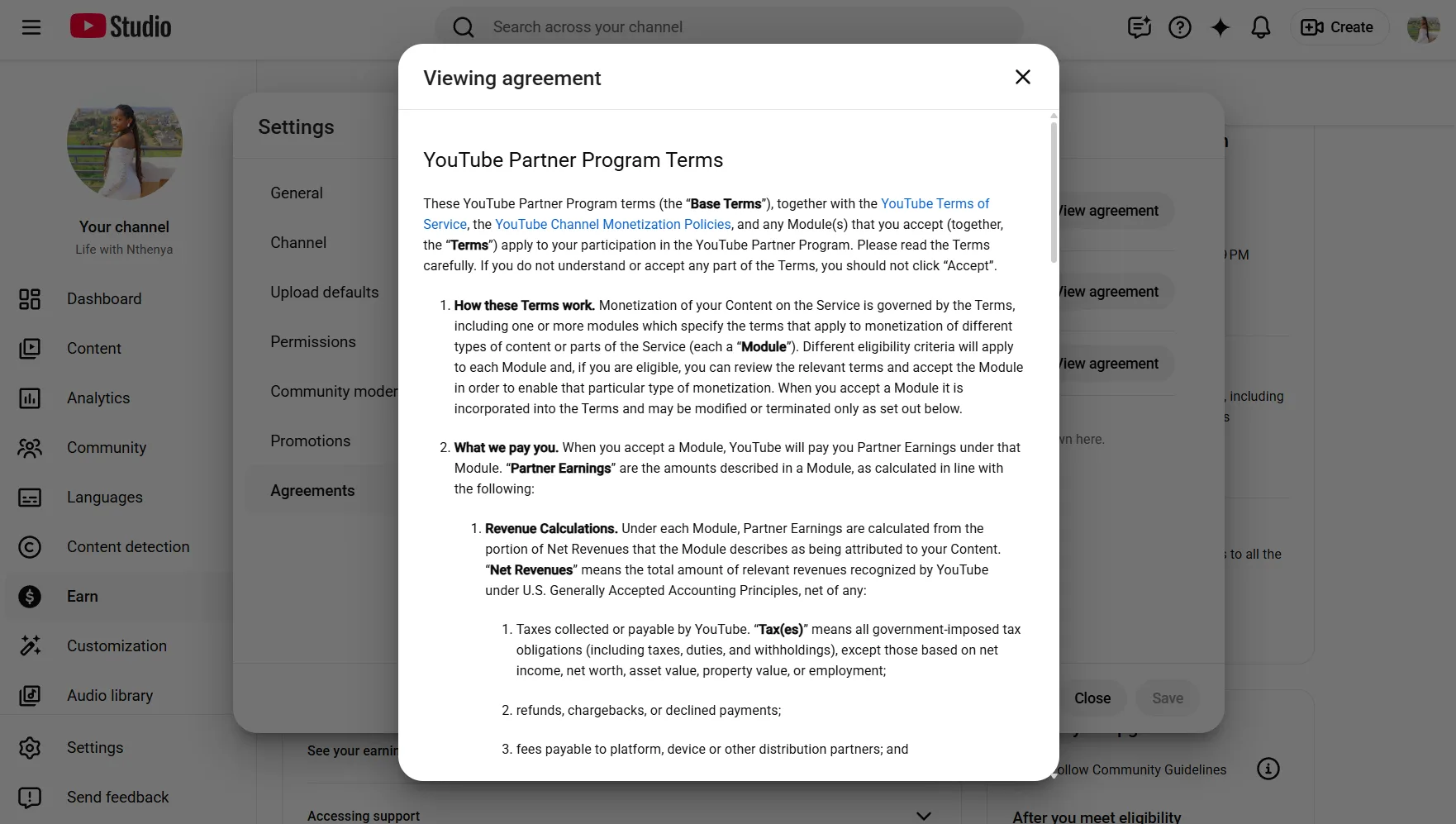
The other compliance factor to understand is the Yellow Dollar Sign. When YouTube's system flags a video as not advertiser-friendly, it replaces the green dollar sign in Studio with a yellow one, significantly limiting the ads shown against that video. Content involving strong language, controversial topics, or sensitive subjects triggers this flag most often. Keeping your content clean against the YouTube monetization rules from the start protects your revenue potential before you even reach Tier 2. If flags do start appearing, the demonetization diagnosis guide explains what each icon and notice means and how to appeal it.
Step 5: Optimize for High CPM and Long-Term ROI
Getting monetized is step one. What you earn once you are in the YouTube Partner Program depends heavily on what you create and who watches it. Two channels with identical view counts can generate vastly different revenue, and the difference comes down to CPM, the amount advertisers pay per thousand views.
High-CPM niches to build around:
- Finance and Investment. Advertisers in this space pay premium rates because their products have high customer lifetime values.
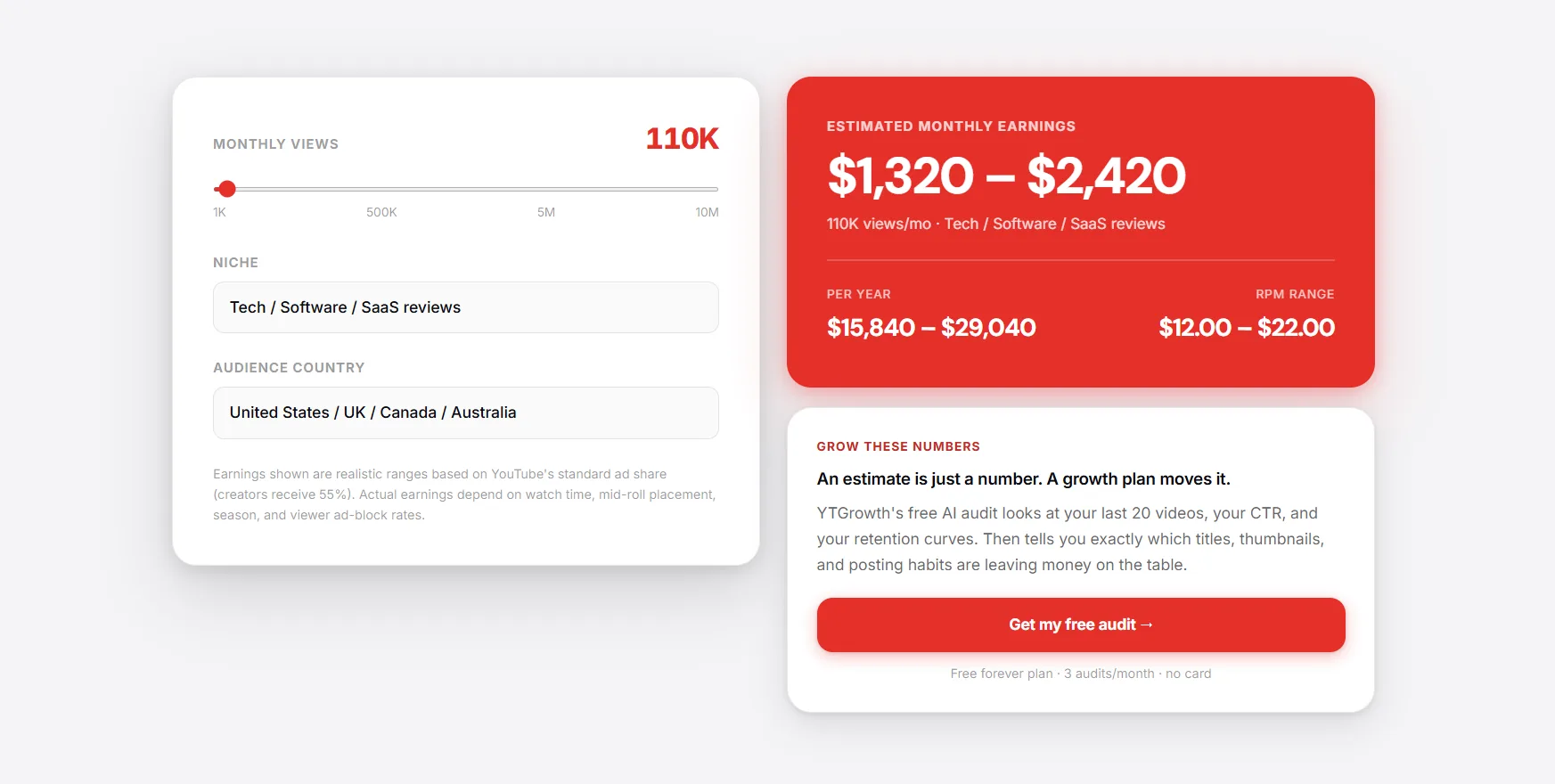
- SaaS and Software. Tech buyers are a valuable audience, and software companies compete aggressively for their attention.
- Real Estate. High-ticket transactions mean advertisers are willing to spend more to reach this audience.
- Tech and Consumer Electronics. Product launches and reviews attract advertiser budgets year-round.
Pro Tip: High CPM niches like Finance and Tech pay more because advertisers value those specific audiences and the purchasing decisions they influence.
The CTR Formula: High-contrast thumbnail pairings plus Curiosity Gap titles. Your thumbnail stops the scroll. Your title closes the click. Both need to work together, not independently.
The First 30 Seconds rule is where most creators lose money without realizing it. If a viewer clicks your video and leaves within the first half-minute, YouTube registers a low retention signal and limits how widely it distributes that video. A weak hook is not just a creative problem. It is a financial one, because reduced distribution means fewer views, lower watch time, and smaller ad revenue. The SEO blueprint covers the 15-second hook structure that prevents most early drop-offs, and the complete hook-writing guide covers exactly what to script instead.
YouTube Shopping is worth activating once you hit Tier 2. It allows you to tag products directly in your videos and across your channel, creating a revenue stream that runs parallel to ads and is not dependent on CPM fluctuations or advertiser seasonal budgets.
Start Earning Before You Qualify
The path to monetization on YouTube has never been more structured. The two-tier system exists specifically to give creators an earlier entry point, and the Bridge Strategy exists to help you hit both tiers faster than a single-format approach ever will.
The creators who get monetized on YouTube are not necessarily the most talented ones in their niche. They are the ones who understood that Shorts and long-form content solve different problems, that compliance protects everything they build, and that CPM optimization determines what their effort is worth once the ads turn on.
Every step in this guide works within the YouTube monetization rules as they stand today. No shortcuts, no policy violations, no risk to your channel. Just a clear framework that gives the algorithm exactly what it needs to reward your content with the reach, the watch time, and eventually the revenue you are building toward.
Use YTGrowth to sharpen your SEO, track your keyword strategy, and analyze your competitors while you work through each stage. The data advantage compounds the same way watch hours do, and both are free to start.