Most creators who struggle with Shorts are applying the wrong mental model. They treat it like a shorter version of long-form content, optimizing thumbnails that never show, crafting titles for search traffic that barely matters, and wondering why a video that took three hours to make got 47 views and died.
The YouTube Shorts algorithm does not work like the rest of YouTube. It is not pull-based like Search or Browse. It is push-based, meaning the platform takes your video and tests it against a seed audience before deciding whether to distribute it further. That single distinction changes everything about how you should be making and structuring your content. The 2026 YouTube algorithm guide covers the broader pull-based system every long-form video runs on.
The gatekeeper of that distribution decision is one metric: the Viewed vs. Swiped Away ratio. Not your subscriber count, not your posting time, not your hashtags. How many people chose to watch versus how many scrolled past in the first two seconds. Master that ratio and the Shorts algorithm 2026 has no choice but to push your content to a wider audience. Fail it and your Short disappears regardless of how good the second half was.
This guide gives you the exact framework to clear that threshold consistently.
The New Rules of the Feed: How the Shorts Algorithm Differs From Long-Form
Long-form YouTube lives and dies by the click. A viewer sees your thumbnail in their Browse feed, makes a decision, and clicks through. That click is the first signal the algorithm measures. Shorts works on a completely different logic. There is no thumbnail decision in the Shorts feed.
The video starts playing the moment a viewer lands on it, which means the first signal the YouTube Shorts algorithm measures is not whether someone clicked. It is whether they stayed or swiped.
The algorithm's primary goal is to keep users on the app by predicting what they will watch next based on the Viewed vs. Swiped Away ratio and Retention. Every distribution decision flows from those two signals.
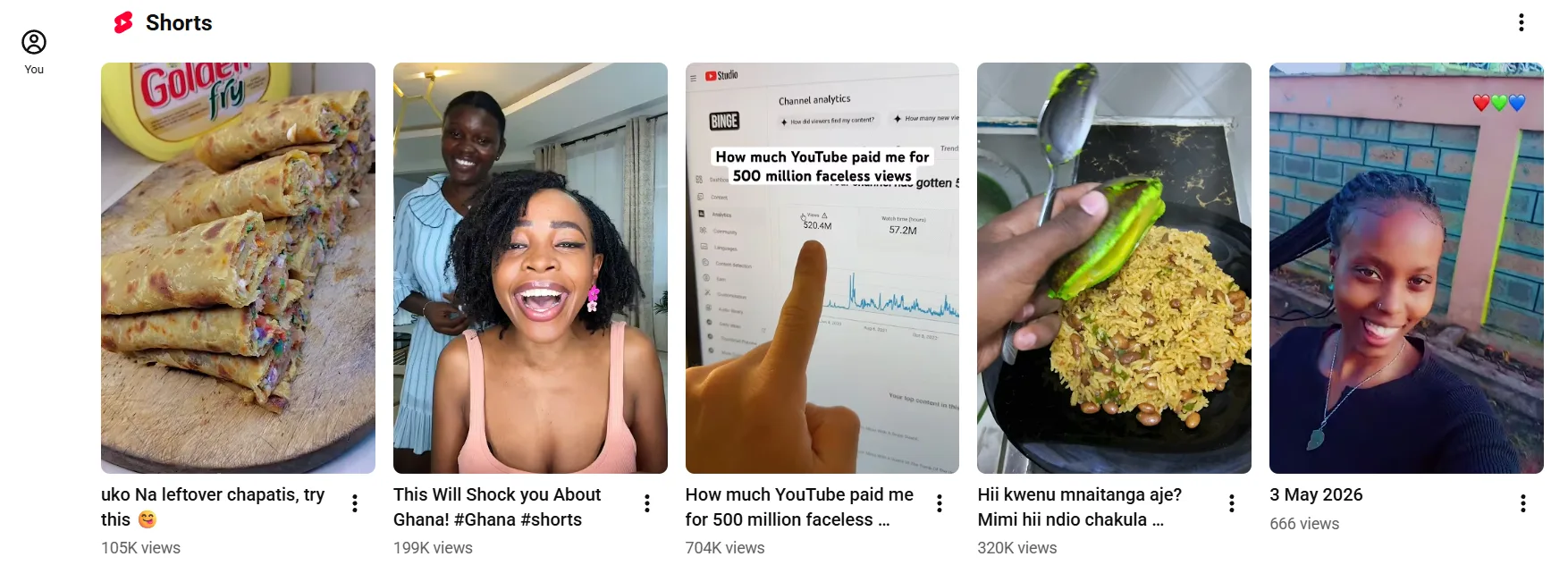
This is the Explore and Exploit mechanism. When you publish a Short, YouTube does not distribute it to your full audience immediately. It pushes the video to a small seed audience first, a group of viewers whose watch history suggests they might enjoy your content. If that seed group watches rather than swipes, the algorithm interprets that as a positive signal and expands distribution to a larger audience. If they swipe, distribution stops.
Explore and Exploit: YouTube tests every Short with a small seed audience first. Strong retention signals trigger broader distribution. Weak signals kill reach before it starts.
Two other mechanics separate Shorts from everything else on the platform. The first is Shelf Life. Unlike long-form videos that build momentum through search rankings over months, a Short can sit dormant for 48 hours or two weeks and suddenly go viral the moment the algorithm finds the right seed audience for it. The second is the 2026 priority shift.
YouTube has recently shifted to prioritize newer uploads in the Shorts feed to maintain high user engagement. Consistent posting gives the algorithm fresh content to test, which is why upload cadence matters more in Shorts than anywhere else on the platform.
Step 1: Optimize for the 'Flip' (The Viewed vs. Swiped Metric)
Everything in your Shorts strategy starts here. Before retention, before the Hook-Body-Loop, before hashtags or captions or posting frequency, there is one binary decision every viewer makes the moment your Short appears on their screen: watch or swipe. The viewed vs swiped away metric is the first gate, and if you do not clear it, nothing else you optimize matters.
Aim for a 60-70% Viewed rate. If it drops below 50%, the algorithm will stop pushing the video to new audiences entirely.
The Opening Frame
The first 500 milliseconds of your Short are doing more work than any other moment in the video. Before a viewer has processed a single word of your text overlay, their brain has already made a subconscious decision about whether the visual is worth staying for. High-contrast visuals, bold colors, and an immediately recognizable subject in the center frame are the three non-negotiable elements of an opening that stops the scroll.
- Use a solid, high-contrast background color that separates your subject from the feed.
- Place your subject dead center in the frame. The Shorts interface crops edges on some devices.
- Avoid slow zooms, fade-ins, or any opening that requires the viewer to wait for something to happen.

The Text Overlay
Text overlays in the first 500 milliseconds serve one purpose: creating a curiosity gap that makes swiping feel like a loss. The viewer needs to feel that leaving now means missing something specific and valuable.
- Keep the opening text to five words or fewer.
- Frame it as an incomplete thought or a direct challenge. "You are doing this wrong" outperforms "How to do this right" because it creates tension that demands resolution.
- Use a bold, high-contrast font that is legible at mobile size without requiring the viewer to adjust their focus.
The Curiosity Gap
The YouTube Shorts viral algorithm rewards content that creates an immediate open loop in the viewer's mind. A visual question, an unexpected image, or a statement that contradicts a common assumption all trigger the same psychological response: the need to resolve the tension before swiping away.
- Open with the result before the process. Showing the outcome first creates a question the viewer needs the video to answer.
- Never open with context. Context can wait until after you have earned the watch.

Step 2: Engineer High Retention With the Hook-Body-Loop Framework
Clearing the Viewed threshold gets your Short into the algorithm's consideration. What happens in the next 15 to 60 seconds determines whether it stays there. The Hook-Body-Loop framework is the structural blueprint that engineers retention high enough to trigger broader distribution, and every second of your Short should serve one of its three phases deliberately.
| Phase | Duration | Goal |
|---|---|---|
| Hook | 0 to 2 seconds | Stop the swipe and create an open loop |
| Body | 3 seconds to end | Deliver value and maintain pace |
| Loop | Final 2 seconds | Transition seamlessly back to the beginning |
For a 15-second Short, aim for 100% retention. For a 60-second Short, aim for 70-80%. These are not aspirational targets. They are the thresholds the YouTube Shorts algorithm uses to determine whether your content deserves wider distribution.
The Hook (0–2 Seconds)
The Hook is a visual or auditory pattern interrupt that forces the brain to pay attention before it has a chance to make a conscious decision about swiping. It is not an introduction. It is a disruption.
Do:
- Open with the most visually striking or emotionally charged moment in your entire Short.
- Use an unexpected sound, a rapid cut, or a bold on-screen statement that creates immediate tension.
- Start mid-action rather than setting up context.
Don't:
- Open with a logo, a channel intro, or any branding sequence.
- Start with "In this video I am going to show you..." Context kills momentum.
- Use a slow fade or any transition that requires the viewer to wait.
The Body (Value Delivery)
The Body is where your YouTube Shorts retention strategy either holds or collapses. Every unnecessary word, pause, or repeated point is a swipe waiting to happen. The standard for Shorts editing is significantly tighter than long-form, and the viewers in the Shorts feed are significantly less patient.
Do:
- Use jump cuts every 2 to 3 seconds to maintain visual momentum.
- Deliver one clear, specific piece of value. Shorts that try to cover multiple points lose viewers at every transition.
- Use on-screen text to reinforce the spoken word for silent viewers.
Don't:
- Include any setup or backstory that could be cut without losing the core value.
- Use background music that competes with the spoken audio.
- Let a single shot run longer than 3 seconds without a cut or visual change.
The Loop (The End)
The Loop is the most underleveraged element of the Hook-Body-Loop framework, and the one with the highest algorithmic upside. Re-watches push retention above 100%, which is one of the strongest signals the Shorts feed uses to identify viral content.
Do:
- End on a visual or audio cue that connects directly back to the opening frame.
- Use a statement at the end that recontextualizes the beginning, making viewers want to rewatch to catch what they missed.
- Design the final frame to feel like a natural starting point rather than a conclusion.
Don't:
- End with a call to subscribe or a black screen. Both signal finality and kill the loop.
- Use a hard cut to silence at the end. Maintain audio continuity through the transition.
The algorithm rewards re-watches. Design your ending to flow seamlessly back into the beginning, and every replay pushes your retention metric higher than 100%.Score every Short title against the live nicheSEO Studio runs the categorization signal Shorts depend on, so the seed audience matches your content the first time. Free to try.Try SEO Studio →
Step 3: Master Technical Specs and the 'Sweet Spot' Duration
The YouTube Shorts algorithm makes distribution decisions before a human ever reviews your content. Several of those decisions are triggered automatically by technical signals, and getting any of them wrong means your Short starts with a disadvantage before a single viewer sees it. These are the non-negotiable specs that keep the algorithm from de-prioritizing your content before the Viewed vs. Swiped test even begins.
Technical requirements for every Short:
- Aspect Ratio. Film and export in 1080x1920 (9:16) vertical format. Black bars on the sides or top signal a non-native vertical video and reduce feed placement priority.
- Resolution. Minimum 1080p. Lower resolution reduces perceived quality and increases swipe rates regardless of content strength.
- Duration. Keep every Short under 60 seconds. The Shorts feed does not surface videos over 60 seconds in the same way, and longer videos compete against long-form rather than the Shorts feed.
- Captions. Add on-screen captions to every Short. A significant percentage of Shorts viewers watch without sound, and captions keep those viewers in the Viewed column rather than the Swiped column.
- Audio. Use original audio or YouTube-licensed music. Third-party copyrighted audio triggers Content ID flags that limit distribution.
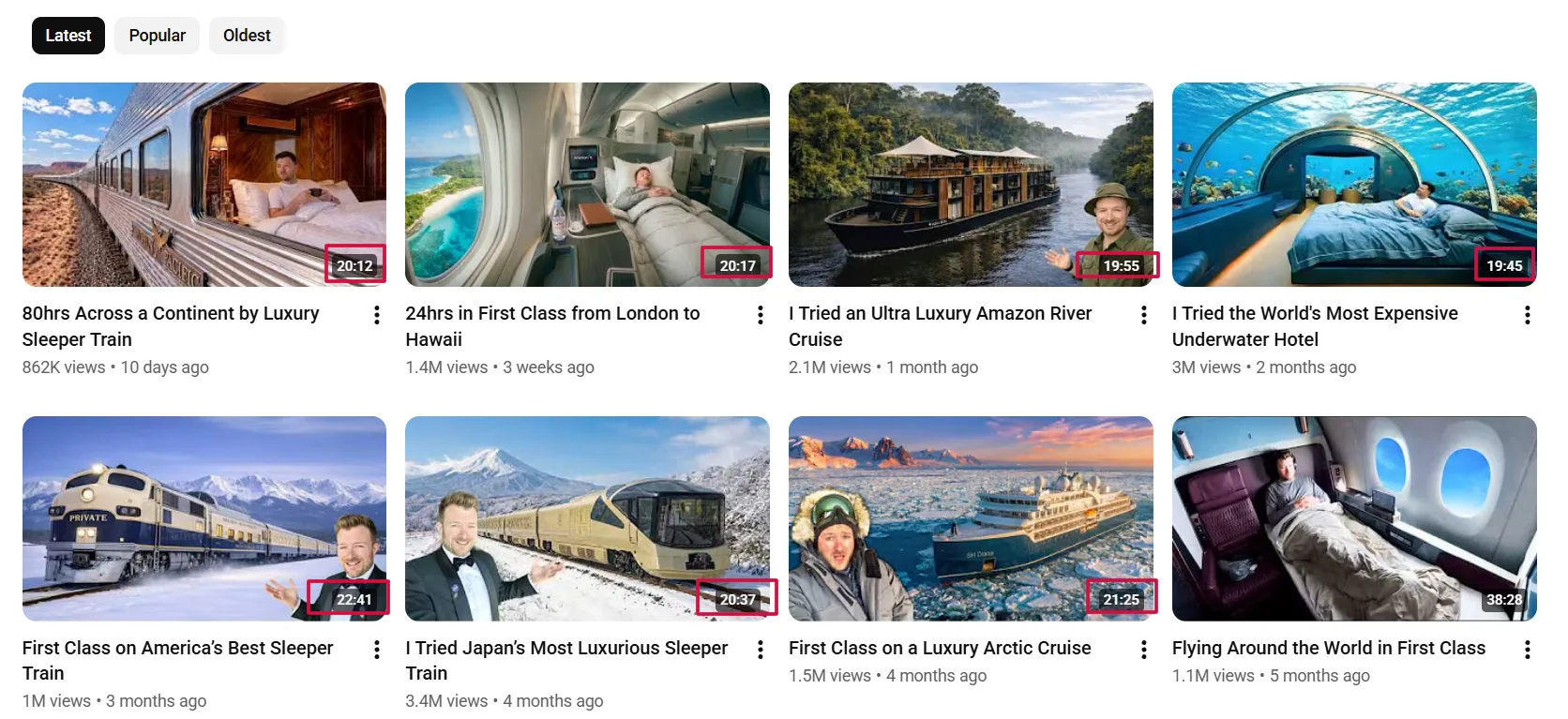
The sweet spot for virality is 25 to 40 seconds. Long enough to deliver genuine value, short enough to maintain the retention rates the algorithm requires for wider distribution.
Pro Tip: YouTube actively de-prioritizes videos with visible watermarks from TikTok or Instagram. Re-uploading cross-platform content is not a content strategy. It is a distribution penalty. Every Short you publish on YouTube should be filmed and exported natively for the platform, with no third-party branding visible anywhere in the frame.
Step 4: Leverage SEO and the 'Related Video' Funnel
The Shorts SEO strategy works differently from everything else on YouTube. You are not optimizing for search discovery the way you would with long-form content. You are optimizing for categorization, giving the algorithm enough context to identify the right seed audience to test your Short against. That distinction changes how you approach every metadata decision. The YouTube SEO primer covers the long-form discovery side if you want to compare.
SEO for Categorization
The title of your Short is the primary categorization signal. Write it in title case, lead with your core keyword, and keep it specific enough that the algorithm can map it to an existing audience cluster without ambiguity. A title like "How to Cook Crispy Chicken Thighs in 30 Seconds" tells the algorithm exactly which viewers to test it against. A title like "This Changed Everything" tells it nothing.
- Place your primary keyword in the first three words of the title.
- Write the first line of the description as a keyword-rich sentence that reinforces the title's categorization signal.
- Use three hashtags maximum: #Shorts plus two niche-specific tags that reflect the content category. Overstuffing hashtags with fifteen or more terms dilutes the categorization signal rather than strengthening it.
The Related Video Bridge
The Related Video feature allows you to link a Short directly to a long-form video, creating a direct traffic funnel from the Shorts feed into your monetizable content library.
This is the primary ROI tool for any creator using Shorts as a discovery engine. A viewer who watched your 30-second Short and wants to go deeper is already primed to watch a 10-minute video on the same topic. The Related Video link removes every barrier between that intent and the action. Once you cross 1,000 subscribers, the same funnel feeds straight into YouTube Partner Program ad revenue.
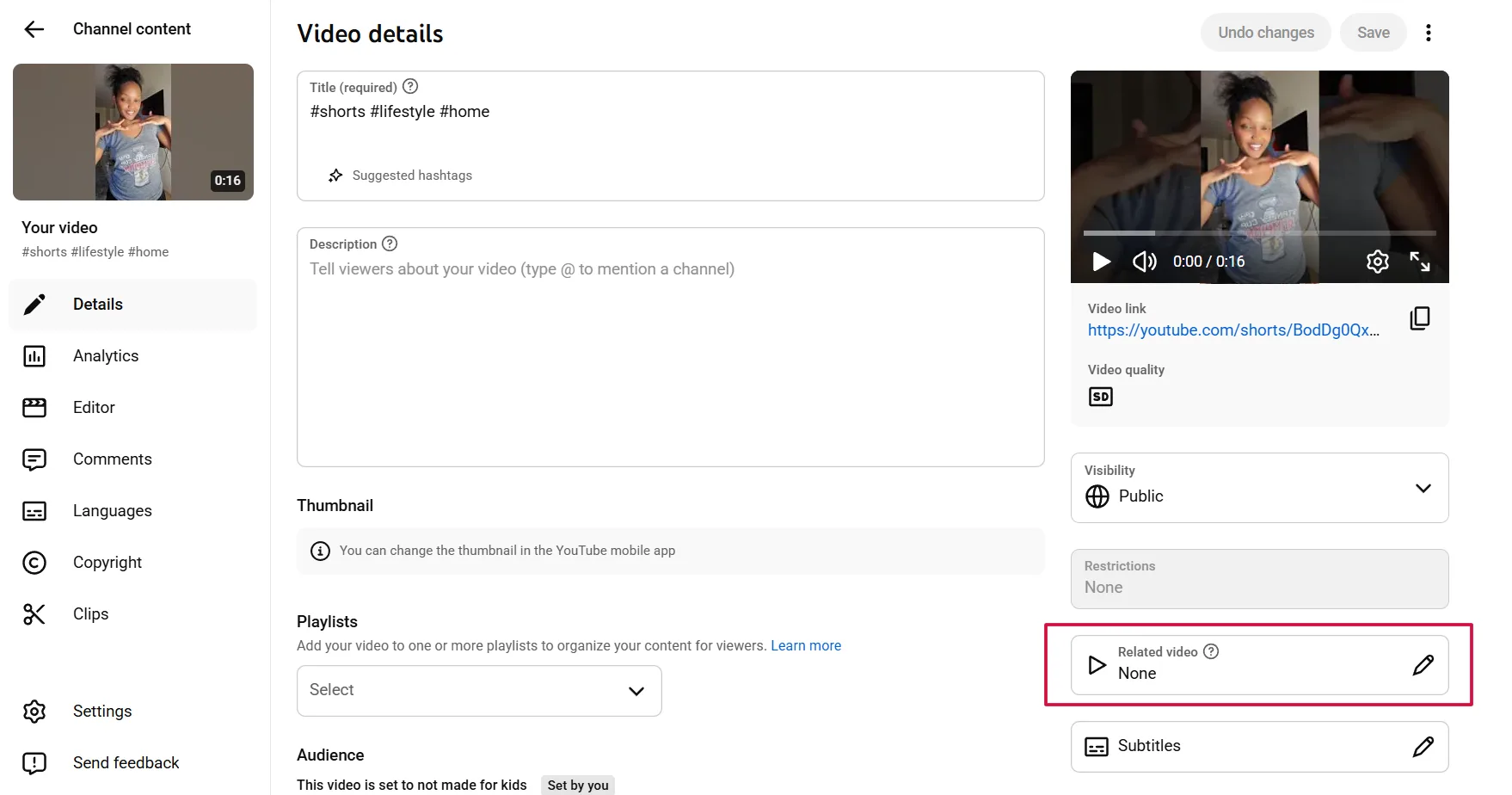
Captions serve a dual purpose in the YouTube Shorts algorithm. They keep silent viewers watching, and they give the algorithm's AI a full text transcript to read and categorize. A Short with accurate captions is significantly easier for the system to match to the right seed audience than one without, which means captions are both a retention tool and a categorization asset simultaneously.
Step 5: Implement a High-Volume Testing Cadence
The YouTube Shorts algorithm needs data to work with, and data comes from uploads. Unlike long-form content where one well-optimized video can build momentum over months through search rankings, Shorts requires a consistent stream of content to give the algorithm enough test points to identify your audience, refine your seed group, and start expanding distribution. One Short per week is not enough. It is the equivalent of running one data point and calling it a study.
The Shorts algorithm rewards volume more than the long-form algorithm. Aim for 3 to 5 Shorts per week to give the system enough content to find your audience and build a reliable distribution pattern.

The quality versus quantity debate does not apply to Shorts the same way it applies to long-form. A 30-second Short that takes two hours to produce and performs poorly still generates algorithmic data that informs your next upload. That data is valuable regardless of the view count, because it tells you exactly where your Viewed vs. Swiped ratio is breaking down and which hooks are failing to stop the scroll.
Posting time matters significantly less than most creators think. What matters is Shelf Life. A Short that gets 200 views on the day it posts can sit dormant for a week and suddenly reach 50,000 once the algorithm finds the right seed audience.
A Short can pop 48 hours or even 2 weeks after posting once the algorithm finds the right seed audience. Never delete an underperforming Short within the first two weeks.
Your weekly Shorts checklist:
- Publish 3 to 5 Shorts using the Hook-Body-Loop structure.
- Check Analytics at the 24-hour mark and identify the Viewed vs. Swiped ratio for each upload.
- Any Short below 50% Viewed needs a stronger opening frame on the next attempt.
- Review which hooks generated the highest Viewed rates and double down on that format.
- Use the Related Video link on every Short to funnel viewers toward your long-form content library.
Frequently Asked Questions
What is the most important metric for the YouTube Shorts algorithm?
The Viewed vs. Swiped Away ratio. Aim for 60 to 70% Viewed; if it drops below 50%, the algorithm stops pushing the video to new audiences entirely. It matters more than subscriber count, posting time, or hashtags combined.
How long should a YouTube Short be to go viral?
The sweet spot is 25 to 40 seconds, long enough to deliver genuine value while staying short enough to protect the retention rates the algorithm requires. Every Short needs to stay under 60 seconds to surface in the Shorts feed at all.
What is the Hook-Body-Loop framework?
A three-phase structure for every Short: the Hook (0 to 2 seconds) stops the swipe and creates an open loop, the Body (3 seconds to the end) delivers value at a tight pace, and the Loop (final 2 seconds) transitions seamlessly back to the opening so the video earns replays.
How many Shorts should I post per week?
3 to 5. The Shorts algorithm rewards volume more than the long-form algorithm because it needs enough test points to identify your audience and refine the seed group it distributes to. One Short a week gives the system too little data to work with.
Does posting time matter for YouTube Shorts?
Far less than Shelf Life. A Short can sit at a couple hundred views for 48 hours or two weeks and then suddenly reach a much wider audience once the algorithm finds the right seed group for it, so never delete an underperforming Short within its first two weeks.
Should I add captions to my Shorts?
Yes, always. Captions keep viewers who watch without sound in the Viewed column instead of the Swiped column, and they give the algorithm a full text transcript to read, which makes categorization and seed-audience matching more accurate.
Can I repost TikTok or Instagram videos as YouTube Shorts?
Not without editing them first. YouTube actively de-prioritizes Shorts with visible watermarks from other platforms. Every Short should be filmed or exported natively for YouTube with no third-party branding visible in the frame.
What does the Related Video feature do?
It links a Short directly to a long-form video, creating a traffic funnel from the Shorts feed into your monetizable content library. A viewer who finishes a 30-second Short and wants more is already primed to click straight into a related long-form upload.
And That's a Wrap
The YouTube Shorts algorithm is not random. Every distribution decision it makes traces back to the same two signals: whether viewers watched or swiped, and how long they stayed. Everything else (the hashtags, the posting time, the subscriber count) sits far behind those two in terms of actual impact on reach.
The Hook-Body-Loop framework gives you the structural blueprint to clear both thresholds consistently. The technical specs keep the algorithm from penalizing your content before it even gets tested. The Related Video funnel converts that reach into long-term channel value. And the 3 to 5 weekly upload cadence gives the system enough data points to find your audience and keep expanding your distribution over time.
The creators winning in the Shorts feed are not the ones who got lucky with one viral video. They are the ones who understood the Shorts algorithm 2026 well enough to engineer the conditions for virality repeatedly, on demand, with every upload. That is what this framework is built to help you do.