The YouTube algorithm is not broken. It is not random, and it is not working against you. It is doing exactly what it was designed to do, and if your views are stagnant, that is the most important thing to understand before you change anything else.
Most creators approach the algorithm like a gatekeeper to outsmart. They chase upload frequency, keyword density, and resolution settings, optimizing everything except the one thing the system measures: how satisfied a real viewer feels after watching their video. That mismatch is where growth dies.
Understanding the YouTube algorithm in 2026 starts with one shift in thinking. The system does not push your video out to an audience. It pulls your video toward viewers who are most likely to watch it, finish it, and come back for more. Every signal it tracks, every metric it weighs, points back to that single objective.
The creators scaling consistently right now are not the ones who found a loophole. They are the ones who stopped fighting the system and started feeding it exactly what it needs. This guide breaks down how. If the relevance side of the picture is new to you, our complete YouTube SEO primer covers the metadata layer first.
The Paradigm Shift: Why the Algorithm 'Pulls' Instead of 'Pushes'
For most of YouTube's early history, the system was built around views. More views meant more promotion, which meant creators optimized for clicks above everything else. Thumbnails became sensational. Titles became misleading. Viewers clicked, felt deceived, and left within seconds. The platform was growing in volume but declining in trust, and YouTube's own data was showing it.
So they rebuilt the system around satisfaction instead. That single decision changed everything about how the YouTube recommendation algorithm works, and most creators never got the memo.
YouTube's recommendation system has two goals: find the right video for each viewer and keep viewers on the platform for as long as possible.
The shift from push to pull is the most important concept in this entire guide. The old model pushed content out, rewarding whoever could generate the most clicks. The new model pulls content toward viewers based on what they have already proven they enjoy, how long they typically watch, and whether they leave a session feeling satisfied or frustrated.
| Then | Now |
|---|---|
| Views were the primary signal | Satisfaction is the primary signal |
| Tags and keywords drove discovery | Watch behavior drives discovery |
| Upload frequency determined reach | Content relevance determines reach |
| The algorithm pushed videos to audiences | The algorithm pulls videos toward viewers |
YouTube does not distribute your video. It matches your video to the right viewer at the right moment, and the only way to earn that match is to produce content that real people finish, enjoy, and come back for. The three discovery systems that power that matching process (Home, Search, and Shorts) each work differently, and the YouTube algorithm explained properly means understanding all three.
The Three Pillars of Discovery: Home, Search, and Shorts
The YouTube algorithm for views is not a single system. It is three separate engines running in parallel, each with its own ranking signals and its own definition of a successful video. A strategy built for one will not automatically work for another, and understanding the difference is what separates creators who grow across all three from those who only ever rank in one.
Home and Suggested: The Personalization Engine
Home and Suggested are where the majority of YouTube's views come from, and both are driven entirely by individual viewer behavior. YouTube studies what each user has watched, how long they watched it, what they searched for afterward, and which channels they return to repeatedly. It then uses those patterns to populate a feed that is unique to every single person on the platform.
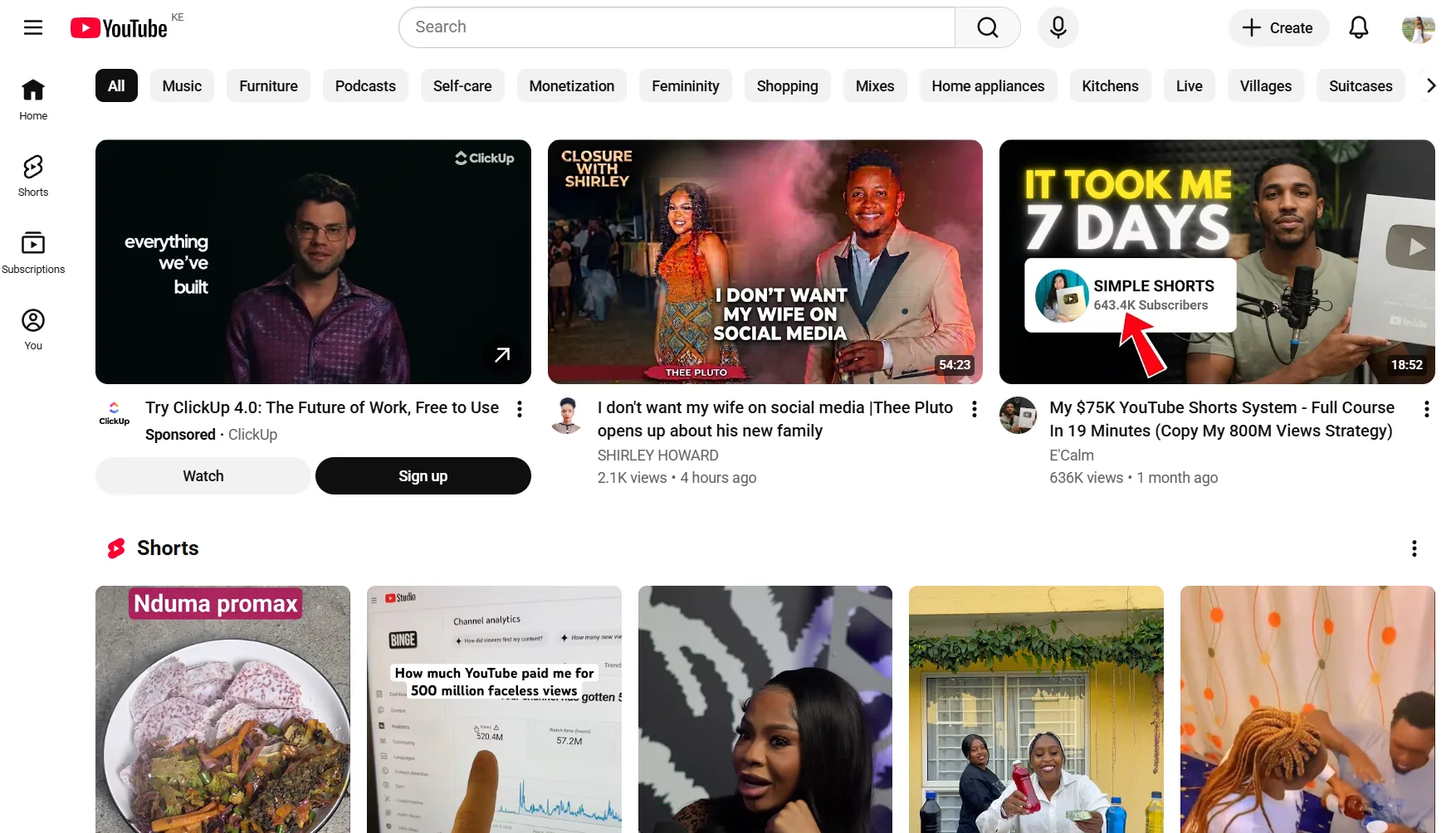
YouTube uses 'co-visitation' signals: viewers who watched Video A also watched Video B. If your video consistently appears in the same sessions as established videos in your niche, YouTube begins treating it as relevant to that same audience.
Primary signal: Watch history, topic affinity, and co-visitation patterns.
- Build content that fits clearly within a defined niche so the algorithm can map your videos to an existing audience cluster.
- Study which established channels your target audience already watches and reverse-engineer their topic angles. Competitor Analysis automates the manual sort and surfaces the content gaps directly.
A video can rank well in Search and still never appear on anyone's Home feed. Search success is driven by keyword relevance. Home success is driven by personalization, and a video that does not fit neatly into a viewer's established interests will be passed over regardless of its view count elsewhere.
Search: The Intent Engine
Search is the most straightforward of the three systems because it operates closest to traditional SEO logic. A viewer types a query, YouTube matches it against titles, descriptions, and closed caption text, and surfaces the most relevant results ranked by engagement and retention signals.
Primary signal: Keyword relevance in the title and first two sentences of the description, supported by audience retention and CTR data from previous viewers.
- Place your primary keyword in the first three words of the title and the opening sentence of the description.
- A video that ranks in Search but loses viewers in the first 30 seconds will fall in rankings over time as the retention data accumulates.
Shorts: The Swipe Engine
The YouTube Shorts algorithm operates on a completely different logic from everything else on the platform. It does not rely heavily on subscriber counts, watch history, or keyword matching. It relies almost entirely on one ratio: how many people chose to keep watching versus how many swiped away.
For Shorts, if more than 60 to 70% of people choose to watch rather than swipe, the video goes viral. That single ratio is the make-or-break metric for the entire Shorts feed.
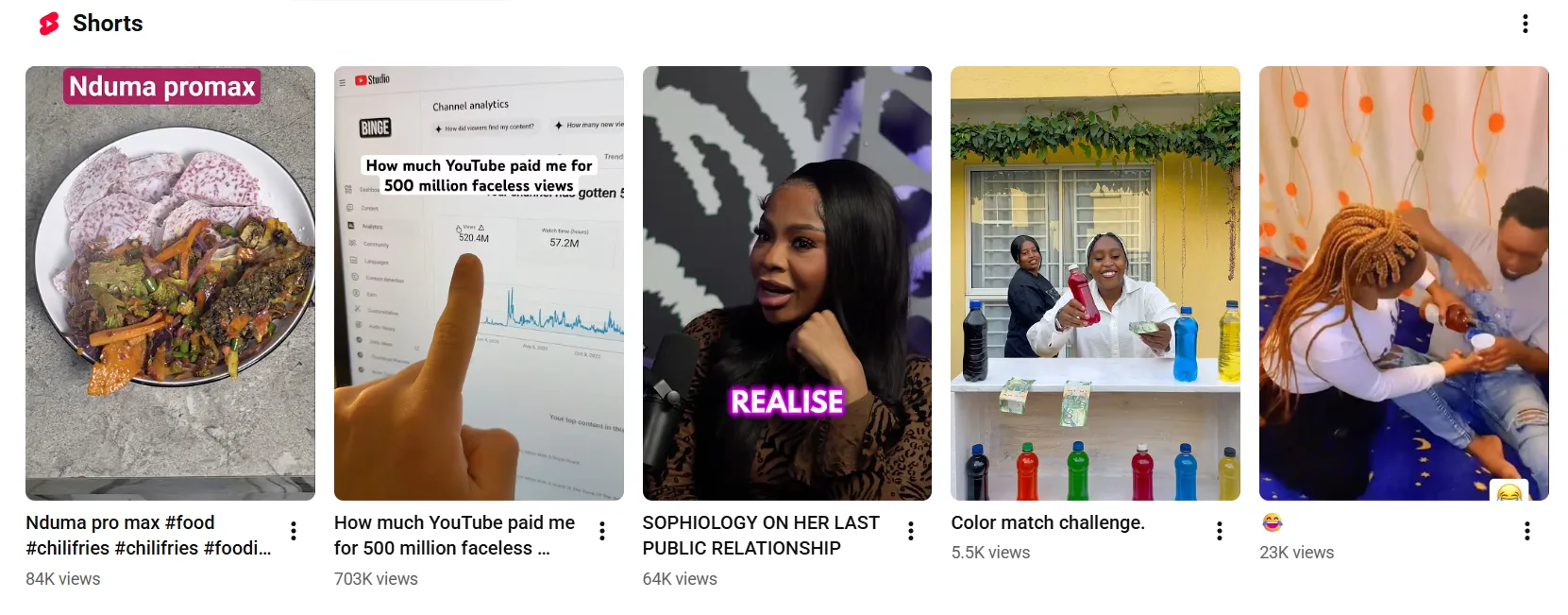
Primary signal: View-to-swipe ratio and loop completion rate.
The first three seconds of a Short determine everything. If the opening frame does not create an immediate reason to stay, the swipe-away rate climbs and distribution collapses. Shorts that loop, where the ending connects naturally back to the beginning, generate higher completion rates and stronger algorithmic signals than those with a hard stop. The Value Loop framework covers the structural pattern that drives both retention and subscriber conversion.
The 'Big Three' Metrics That Move the Needle
Understanding the YouTube algorithm explained at a theoretical level is one thing. Knowing which specific numbers in your analytics dashboard to act on is another. Three metrics determine whether your video gets distributed or buried, and each one measures a different layer of viewer behavior.
| Metric | What It Measures | Target Goal |
|---|---|---|
| CTR | How compelling your packaging is | Above 4% |
| AVD | How well your content holds attention | Above 50% of video length |
| Satisfaction | How good the viewer felt after watching | No negative survey signals |
The 2026 SEO blueprint goes deeper on the specific 6% CTR and 50% AVD benchmarks that flip the algorithm into Browse and Suggested distribution.
CTR: The Packaging Metric
CTR is the first gate. It measures the percentage of viewers who saw your thumbnail and title in the feed and chose to click. If your CTR is below 4%, the packaging is failing, and no amount of content quality can compensate for a video that never gets watched. A weak thumbnail or a vague title sends viewers scrolling to the next option before your content ever gets a chance.
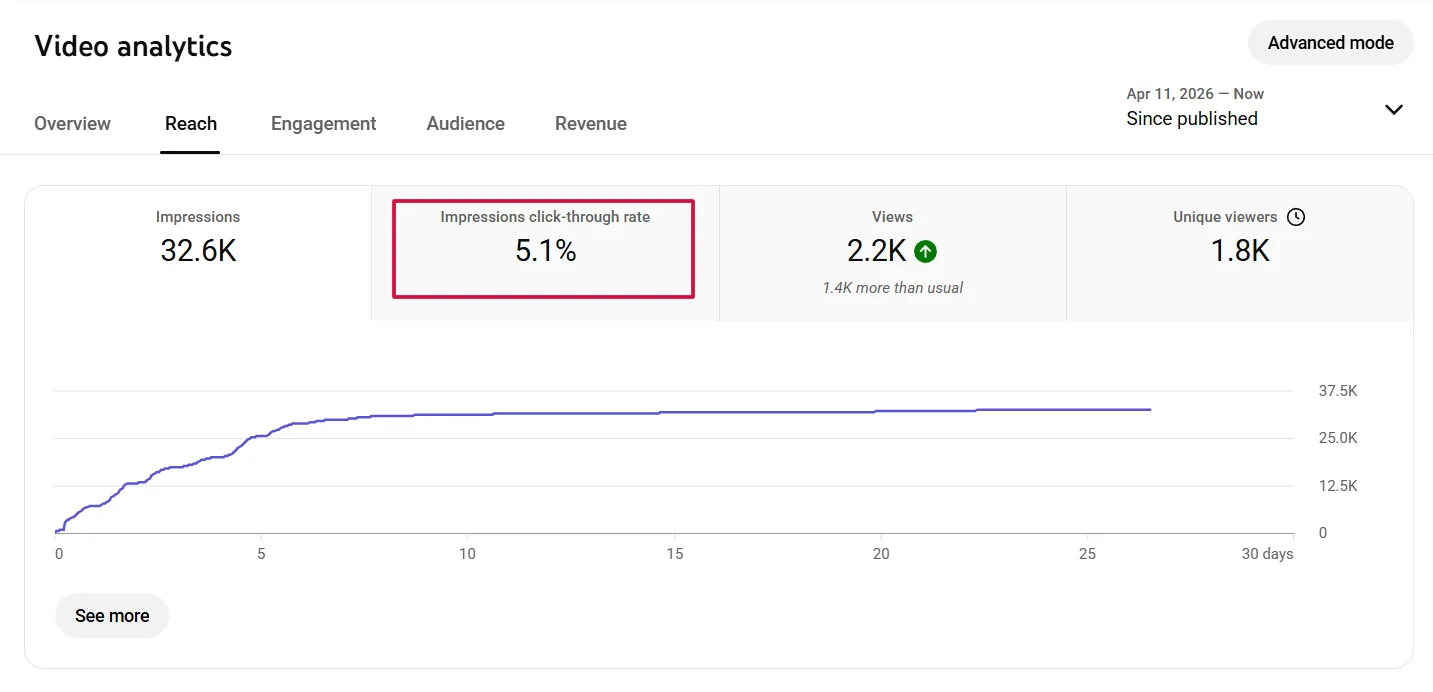
The relationship between CTR and AVD is where most creators get into trouble. A sensational thumbnail that overpromises drives clicks but destroys retention when the content does not deliver. YouTube tracks both signals together, and a pattern of high CTR with low AVD is one of the clearest signals of clickbait the algorithm penalizes over time.
Score every thumbnail before you publishThumbnail IQ runs face detection, contrast analysis, and a vision-model curiosity-gap read against your niche. Free to try.Try Thumbnail IQ →AVD: The Pacing Metric
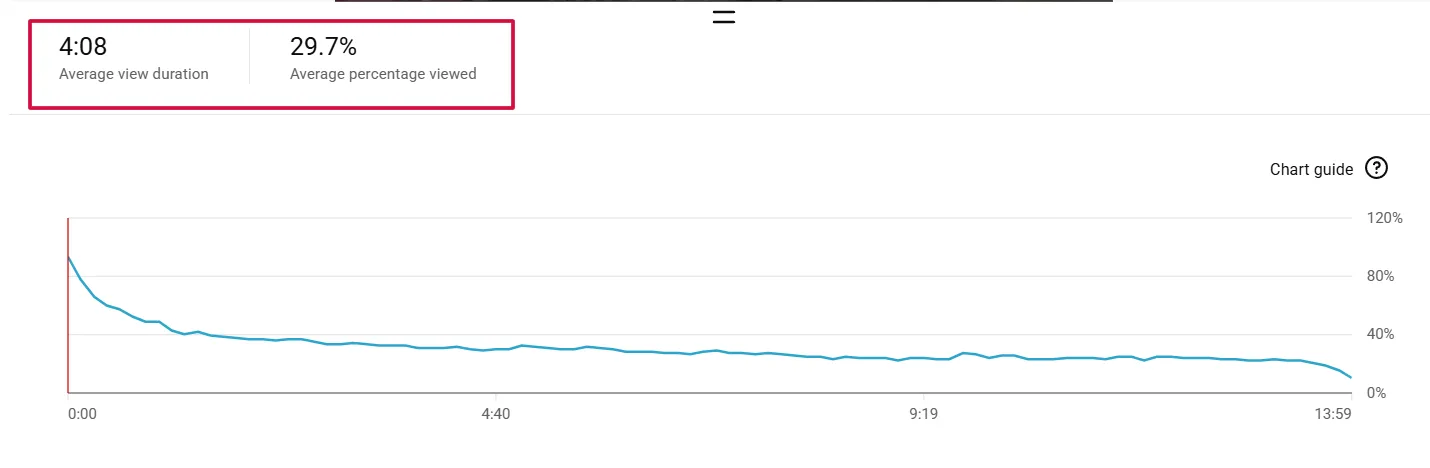
AVD measures how much of your video the average viewer watches. It is the algorithm's most direct signal of content quality, and the first 30 seconds carry more weight than any other portion of the video.
If you lose 50% of your audience in the first 30 seconds, the algorithm stops recommending the video regardless of how strong the rest of the content is.
Every second of audience retention you earn in the opening of a video extends the window of distribution the algorithm is willing to give you. State the value proposition immediately, skip the preamble, and give the viewer a reason to stay before they have a chance to leave.
Satisfaction: The Hidden Metric
Satisfaction is the metric most creators never think about because it does not appear as a single number in YouTube Studio. YouTube periodically serves users a survey after watching a video, asking them to rate their experience. It also tracks 'Not Interested' clicks, which occur when a viewer actively dismisses a recommendation after watching.
YouTube uses User Surveys and star ratings to determine if a video was genuinely good, not just clicked. A video with strong CTR and AVD but poor satisfaction scores will plateau in distribution over time.
This is why the YouTube recommendation algorithm cannot be gamed long-term. Even if a creator engineers strong click and retention numbers through manipulation, the satisfaction layer catches the gap between what viewers expected and what they received. The only durable strategy is content that genuinely delivers on its promise every single time.
Advanced Growth: Velocity, Session Time, and the 'Bridge' Method
Understanding the YouTube algorithm at a basic level gets you consistent views. Understanding it at this level gets you exponential growth. These three strategies are what separate creators who plateau at a comfortable number from those who break into genuinely new audience territory.
Velocity: The 24-Hour Test
Every video you publish goes through an immediate testing window. The YouTube algorithm uses the first 24 hours of a video's performance as a controlled experiment, showing it to a small segment of your existing audience and measuring how they respond. Strong CTR and retention in that window signals the algorithm to expand distribution to a broader audience. Weak signals in that window shrink it.
- Publish when your existing audience is most active to maximize early engagement velocity.
- Promote the video through your community tab and other channels in the first few hours to seed the initial performance data.
- Never judge a video's long-term potential in the first 48 hours. The test window needs time to translate into broader distribution.
Session Time: The Platform Loyalty Signal
Most creators think their job ends when a viewer finishes their video. The YouTube suggested videos algorithm sees it differently. What a viewer does immediately after watching your content is a direct signal about the quality of their experience.
If your video leads a user to watch another video, even a competitor's, it is a positive signal for the algorithm. YouTube rewards channels that contribute to longer platform sessions, not just longer individual views.
- Add End Screens linking to your most relevant playlist to keep viewers inside your content library.
- Use Cards at natural transition points to surface related videos before interest drops.
- A viewer who watches three of your videos in a single session sends a stronger algorithmic signal than three separate viewers watching one video each.
The Bridge Strategy
Pro Tip: Go to your YouTube Studio Audience tab and look at 'Other videos your audience watched.' These are the channels and videos your viewers consume alongside yours. That list is your co-visitation map, and it tells you exactly which topics, formats, and creators your audience already trusts. Build your next ten video ideas around the overlapping interests you find there, and the algorithm will naturally begin pulling your content into the same recommendation clusters as the channels already reaching your target audience.
For a side-by-side breakdown of which competitor research tools surface this map fastest, the 5-pillar tool stack compares VidIQ, TubeBuddy, and YTGrowth across the same workflow.
Myth-Busting: What You Can Stop Worrying About in 2026
Myth: Tags are essential for discovery.
YouTube explicitly states that tags play a 'minimal role' in discovery. They are the last thing the algorithm looks at, and only when the title and description fail to provide enough context. Spending twenty minutes crafting the perfect tag list is twenty minutes taken away from your thumbnail and hook, which are the elements that move the needle.
Myth: You need to upload every day to grow.
Daily uploading with inconsistent quality is one of the fastest ways to train the YouTube algorithm to stop distributing your content. A string of low-retention videos signals declining relevance, and that signal does not reset just because you posted again the next day. A well-crafted video published twice a week consistently outperforms daily uploads that viewers do not finish.
Myth: 4K video performs better algorithmically.
Resolution has no direct impact on distribution. Audio quality does. Viewers will tolerate average visuals for compelling content, but poor audio triggers immediate abandonment. Upgrading to one of the best microphones for YouTube is the cheapest retention fix most creators overlook. A video shot on a smartphone with clear audio and strong retention will outrank a 4K production that loses half its audience in the first thirty seconds.
Myth: Shadowbanning is real and YouTube is suppressing your channel.
Shadowbanning as creators describe it does not exist on YouTube. What looks like suppression is almost always a relevance dip, where the topics you are covering no longer match the active interests of your audience. The fix is not to post more. It is to go back into your analytics, identify which content is still performing, and realign your next videos around those signals.
Let's Sum It Up
The YouTube algorithm has not changed its fundamental objective in years. It has always been designed to find the right video for the right viewer and keep them on the platform as long as possible. What has changed is how sophisticated it has become at doing that, and how little room that leaves for creators who are still optimizing for signals that stopped mattering years ago.
CTR gets the click. AVD earns the watch. Satisfaction keeps the algorithm sending more viewers your way. Everything else (the tags, the resolution, the upload frequency) sits far behind those three in terms of actual impact on distribution.
The creators winning on YouTube in 2026 are not the ones who cracked a code. They are the ones who accepted that the system rewards genuine audience satisfaction above everything else, and built their entire content process around delivering it consistently. That is the only strategy with no expiry date.