Growing a YouTube channel in 2026 is harder than the success stories make it look. Upload frequency is up across every niche, competition for attention is more intense, and the algorithm has grown far more sophisticated in how it decides which content gets promoted and which gets buried.
The channels breaking through share a common discipline. They approach YouTube channel optimization as a two-part system, one side built for the algorithm and the other built for the human viewer. The technical layer ensures content gets found through strong metadata, proper indexing, and smart video seo. The behavioral layer ensures it gets clicked and watched through visual psychology, emotional triggers, and retention-focused storytelling.
Weak discovery limits how many people ever see your content. Poor clickability wastes the impressions you do earn. Both problems have clear, actionable solutions, and they start with understanding exactly where your channel is losing ground.
The Dual-Engine Framework: Searchability vs. Clickability
YouTube has moved well past the era of keyword stuffing. The algorithm no longer promotes content simply because it is tagged correctly. It promotes content that people actively search for, click on, and watch to the end. That shift has made YouTube channel seo optimization a far more layered discipline than it used to be. Our complete YouTube SEO primer covers the foundation if you want to start with the basics.
Every successful channel today runs on two engines working in parallel.
Searchability is the technical foundation. It is everything that helps YouTube categorize, index, and surface your content to the right audience at the right moment. Titles, descriptions, tags, captions, and file metadata all feed this engine.
Clickability is the human layer. It is every visual and psychological trigger that convinces a real viewer to choose your video over the dozens of others competing for the same eyeball on their screen.
The Golden Rule of YouTube channel growth optimization in 2026: Average View Duration and Click-Through Rate are the ultimate ranking signals. The algorithm interprets high AVD as proof that your content delivers on its promise, and high CTR as proof that your packaging earns attention. Neither metric is an accident. Both are engineered.
Laying the Metadata Foundation (Channel-Level SEO)
Channel-level settings are the bedrock of any serious YouTube channel optimization strategy. They are configured once and work continuously in the background, signaling to YouTube what your channel is about, who it serves, and where it belongs in search results. Getting these right before focusing on individual videos is what separates channels with long-term authority from those chasing short-term spikes.
The About Section
The first 150 characters of your About section function as the meta description of your channel. They appear directly in YouTube search snippets, which makes them prime real estate for your most important keywords. Lead with a clear, keyword-rich statement of what your channel delivers, and treat every character in that opening line as intentional.
Channel Tags
Channel tags are set inside YouTube Studio under Settings and Basic Info. They do not appear publicly, but they directly inform how YouTube categorizes your content at a channel level. Aim for 10 to 15 broad keywords that reflect your niche, content style, and audience intent. These tags give the algorithm a consistent reference point every time you upload.
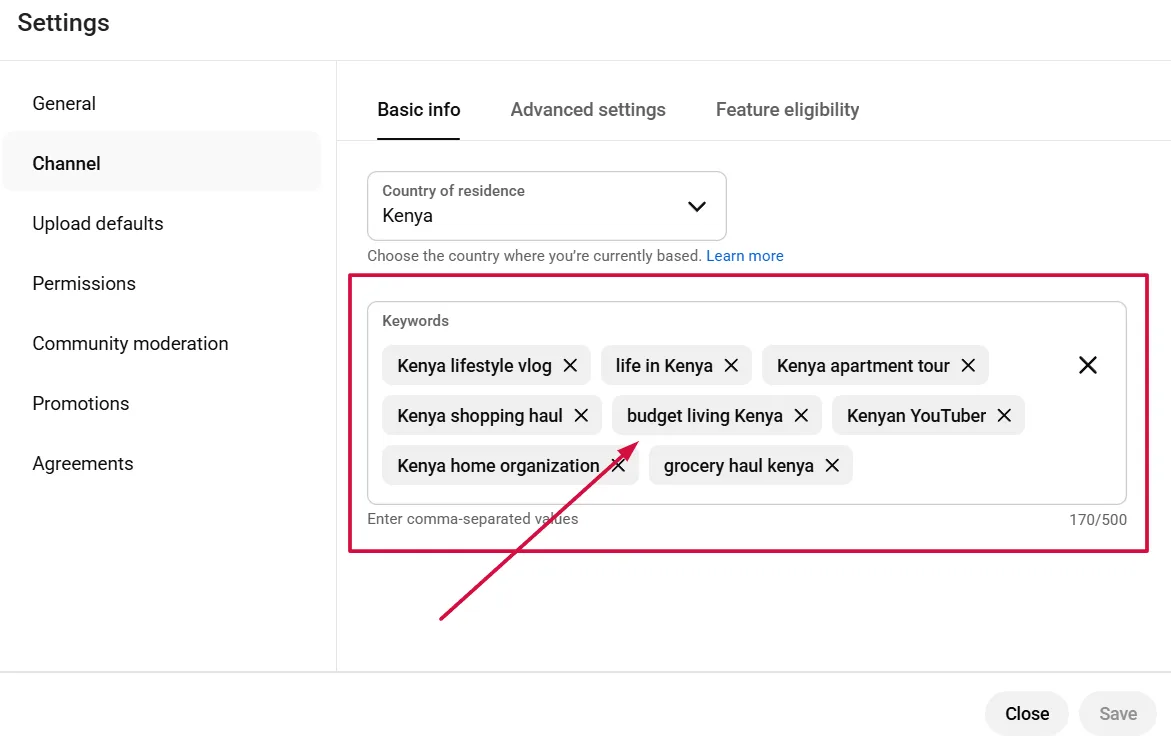
Pro tip: Include your primary keyword, topic variations, and one or two audience-descriptive terms in your channel tags. Think of them as your channel's permanent SEO brief.
Handle and URL Consistency
Your channel handle, URL, and username should all reflect the same brand identity across platforms. Consistency here strengthens cross-platform searchability and makes your channel easier to find whether someone is searching on YouTube, Google, or social media. A mismatched handle is a small but avoidable friction point that chips away at brand authority over time.
Channel Trailer
Your channel trailer is the first thing non-subscribers see when they land on your page. It should open with a direct value statement, establish your upload rhythm, and give a clear reason to subscribe. A well-optimized trailer reduces bounce rate on your channel page, which feeds positively into the broader signals that drive YouTube channel seo optimization.
Mastering the Discovery Engine (Video-Level SEO)
Channel settings establish your authority, but video-level video seo is what drives individual content into search results. Every upload is an opportunity to send precise signals to the algorithm, and the difference between a video that ranks and one that stagnates often comes down to a handful of deliberate decisions made before and during the upload process. The 2026 YouTube SEO Blueprint goes deeper into the retention and CTR side of this same engine.
Keyword Research
Effective YouTube channel optimization starts with understanding exactly what your audience is searching for. Tools like VidIQ and TubeBuddy surface search volume, competition scores, and related keyword opportunities within your niche. The YouTube search bar autocomplete is equally valuable since every suggestion it generates reflects real, high-frequency search behavior from real users. YTGrowth's Keyword Explorer automates the cluster work if you want to skip the manual filtering.
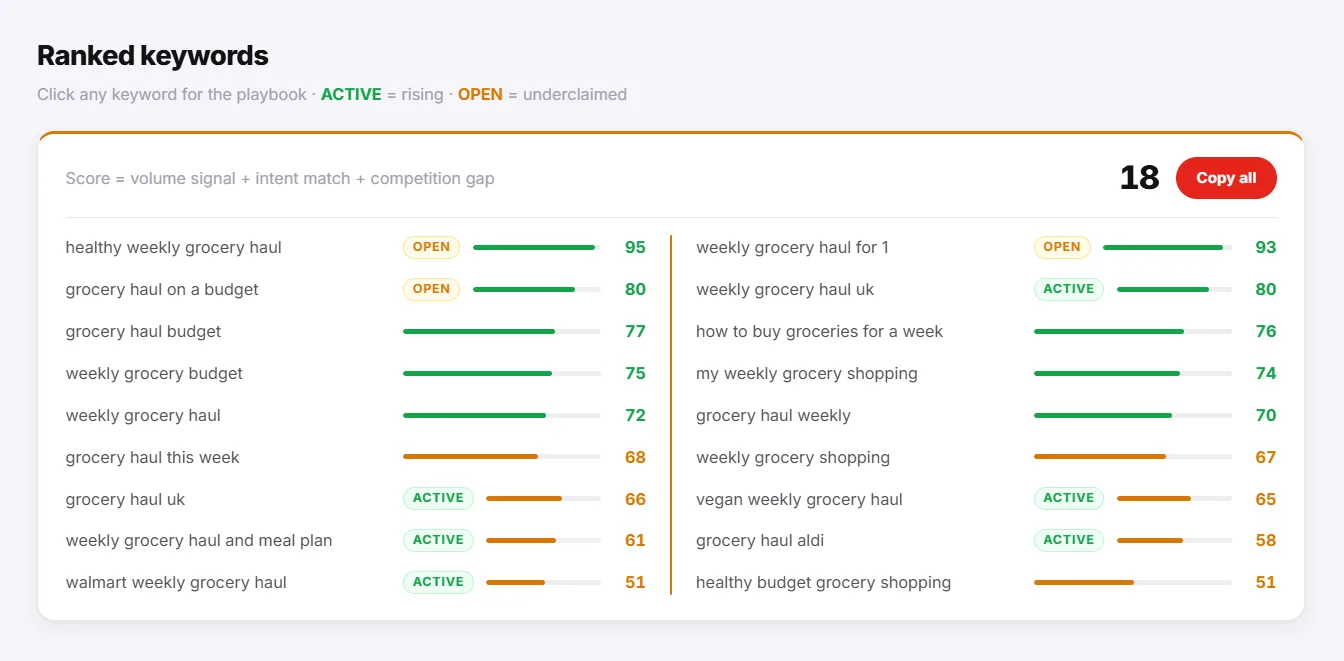
Title Optimization
Your title carries more SEO weight than any other metadata field. Placing your primary keyword at the beginning of the title improves both search ranking and click-through rate simultaneously. Pair that keyword placement with power words like "proven," "complete," "fast," or "without" to sharpen the emotional pull of the title for human viewers scanning a results page.
The 3-Part Description Strategy
A strong description follows a clear structure. The first two lines must include your primary keywords naturally, since that is what appears in search snippets before the "show more" cutoff. Timestamps come next, as chapters allow your video to appear in Google's Key Moments feature, extending your reach beyond YouTube search entirely. Close the description with CTA links pointing to your other content, social profiles, or lead magnets.
Description template:
- Lines 1 to 2: Primary keyword plus clear content summary
- Lines 3 onward: Timestamps and chapter markers
- Bottom section: Subscribe CTA, related video links, and external resources
The Role of Tags
Tags are no longer the primary driver of optimize your YouTube videos strategy, but they still serve a supporting function. They help YouTube confirm the categorization signals already established by your title and description. Keep your tag list focused, using your primary keyword, close variations, and two or three broader topic tags, and avoid padding it with loosely related terms that dilute the signal.
Score every title against the live YouTube nicheSEO Studio runs the title, description, and tag pass against the top-ranking videos in your category, then pushes the winner back to YouTube with one click. Free to try.Try SEO Studio →Optimizing for the Click (Visual Branding and CTR)
Search rankings determine how often your video gets shown. Thumbnails and titles determine whether anyone clicks. A strong YouTube channel optimization checklist that ignores visual branding is only solving half the problem, because CTR is one of the heaviest signals the algorithm uses to decide whether to push your content further.
Thumbnail Psychology
The click decision happens in a fraction of a second. High-contrast colors like yellow, red, and bright green perform consistently well because they stand out against YouTube's white and dark interface. Pairing bold colors with an emotive human face adds a psychological pull that abstract or text-only thumbnails rarely match.
Thumbnail text should follow the 3-word rule. Keeping overlaid text to three or four words in a bold, legible font ensures readability on mobile screens where thumbnails render at a fraction of their desktop size. Anything longer gets compressed into an unreadable blur and loses its impact entirely.
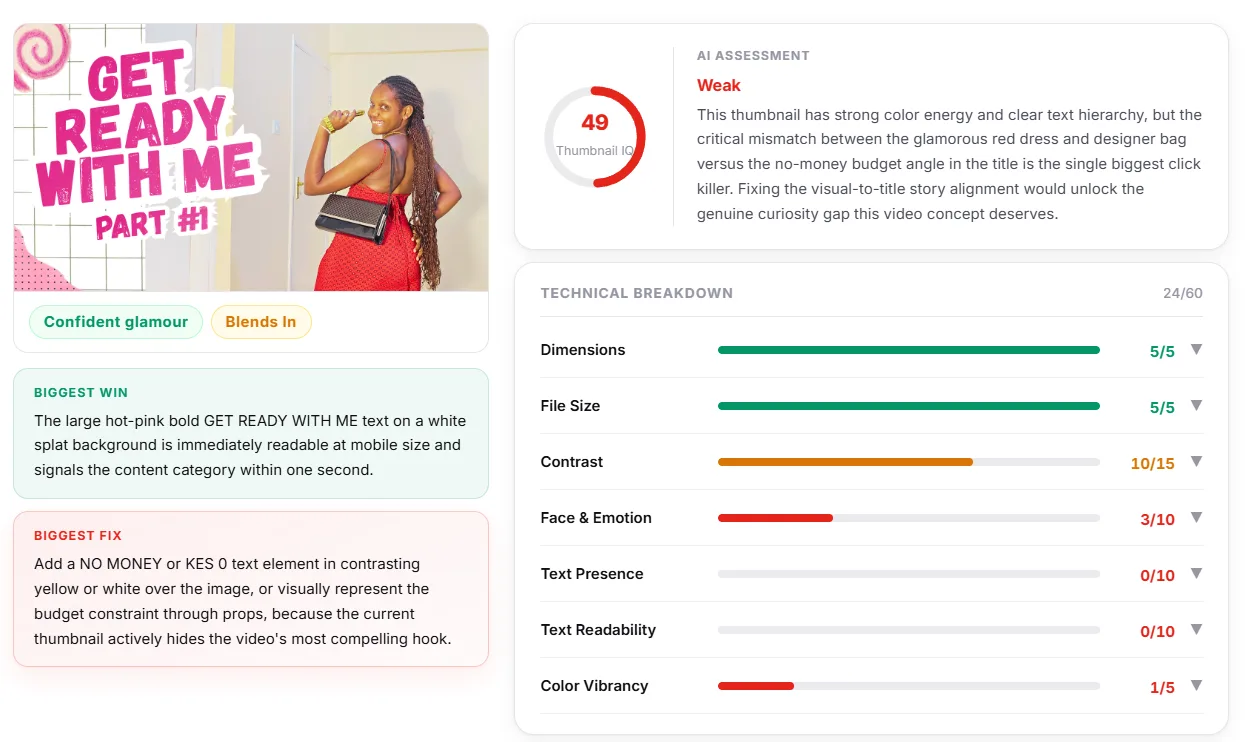
Thumbnail design checklist:
- High-contrast background color
- Emotive facial expression where relevant
- Maximum 3 to 4 words of overlaid text
- Bold, sans-serif font at large size
- No cluttered elements competing for attention
- Consistent color palette and style across all videos
Banner Art and Visual Consistency
Your channel banner is the first brand impression a profile visitor receives. It should communicate your content focus and upload schedule clearly, without requiring the visitor to read your About section to understand what you do. Get the exact banner dimensions and safe zone right first, since a mistimed crop on mobile undoes the design before anyone reads it.
Consistency across thumbnails, banners, and channel art builds recognition in the Suggested Videos sidebar, which is one of the highest-traffic discovery surfaces on the platform. When a viewer sees your thumbnail style repeatedly, it creates familiarity that increases the likelihood of a click even before they read the title. That familiarity compounds directly into stronger YouTube channel growth optimization over time. Score every design against the top performers in your niche with Thumbnail IQ before you publish.
Engineering Retention (The Algorithm's Favorite Metric)
Click-through rate gets your video opened. Average View Duration determines whether the algorithm promotes it further. YouTube interprets high retention as direct evidence that your content delivers on its promise, and it responds by distributing that content to a wider audience.
Every structural decision inside your video either builds or bleeds that retention, and the best YouTube channel optimization tool in existence is a well-engineered watch experience. The same retention discipline drives the 2026 YouTube algorithm across Browse, Suggested, and Search.
The 30-Second Hook
The first 30 seconds of a video are where the majority of drop-offs happen. A strong hook does two things immediately: it validates the title by confirming the viewer is in the right place, and it promises a specific payoff that makes leaving feel like a bad decision. Skip the lengthy intro, skip the subscribe reminder, and get to the value fast.
Playlists as Watch Session Drivers
Playlists are one of the most underused levers in YouTube channel growth optimization. When a viewer finishes one video and automatically plays the next, YouTube registers that as a Watch Session, a higher-tier signal than a standalone view.
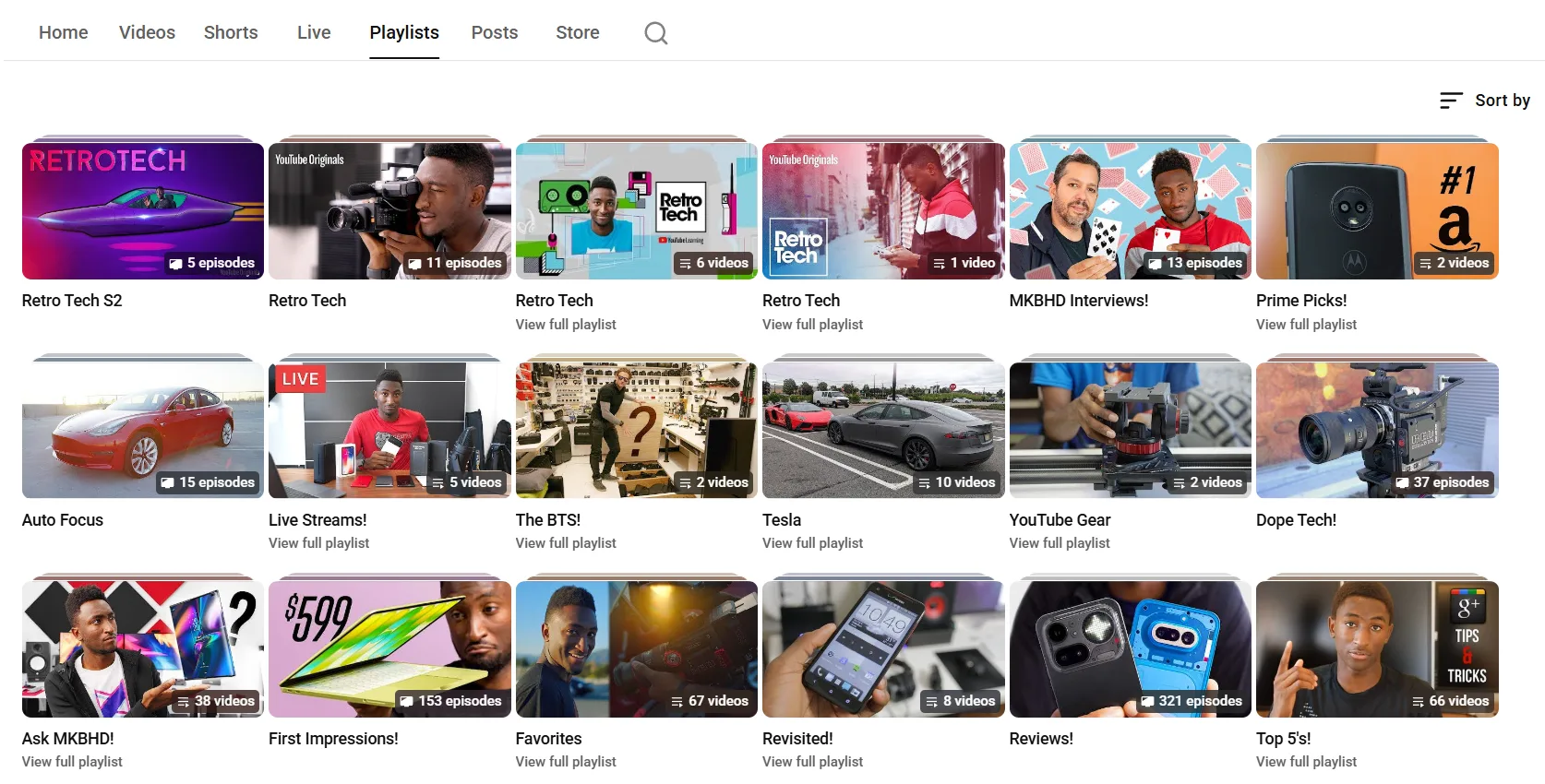
Channels that organize their content into logical playlists keep viewers on the platform longer, and the algorithm responds by promoting those channels more heavily across search and suggested feeds.
Pro Tip: Build playlists around viewer intent, not just topic. A playlist titled "YouTube Growth for Beginners: Start Here" converts better than one titled "YouTube Tips" because it speaks directly to where the viewer is in their journey.
End Screens, Cards, and Engagement
End screens and cards should always direct viewers to the next logical video in their learning or entertainment journey. A well-placed card at the moment a viewer's question is answered can extend a Watch Session significantly.
Pinning a comment immediately after upload also sparks early engagement, which boosts video velocity in the first 24 to 48 hours and signals to the algorithm that the content is generating genuine interaction worth amplifying across seo for YouTube channel ranking factors.
Technical Wins and Accessibility (The Hidden Indexing Boost)
The technical layer of YouTube channel seo optimization is where most creators leave easy gains on the table. These are not complex strategies. They are small, deliberate actions taken before and during the upload process that send additional signals to the algorithm before a single viewer ever watches the video.
File Naming
YouTube's AI scans file metadata the moment a video is uploaded. A file named "video_final_v3.mp4" tells the algorithm nothing. A file named "how-to-optimize-youtube-channel.mp4" sends an immediate keyword signal that supports everything in your title and description.
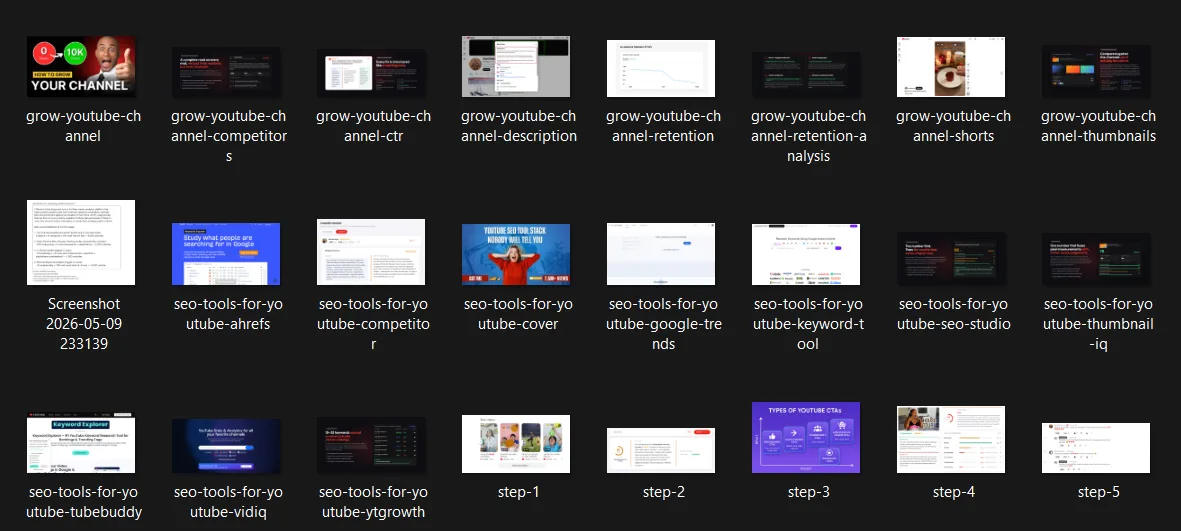
Renaming your video file before upload is one of the highest-value, lowest-effort steps in any YouTube channel optimization checklist, yet it remains one of the most consistently skipped.
Manual Closed Captions vs. Auto-Generated Captions
Auto-generated captions are convenient but unreliable for indexing purposes. They contain errors, misinterpret technical terms, and give the algorithm an incomplete picture of your content. Uploading a clean .srt file allows YouTube to index every spoken word in your video accurately, effectively turning your entire script into searchable text.
| Auto-Generated Captions | Manual .srt File | |
|---|---|---|
| Accuracy | Moderate, error-prone | High, fully controlled |
| Indexing Quality | Inconsistent | Complete and reliable |
| Accessibility | Basic | Professional |
| SEO Impact | Limited | Significantly stronger |
YouTube's AI also listens to spoken content directly for categorization signals. Naturally incorporating your target keywords into your script, not stuffing them, reinforces the same signals your metadata is already sending and strengthens the overall authority of every video as part of your broader optimize your YouTube videos strategy.
Optimization Is a Discipline, Not a Task
YouTube channel optimization is not a one-time task. It is a discipline applied consistently across every upload, every metadata field, and every visual decision. The channels that compound growth over time are not necessarily producing better content than their competitors. They are packaging it smarter, configuring it more precisely, and engineering the viewer experience more deliberately.
The five steps in this guide cover every layer of that system. Channel-level metadata builds your authority foundation. Video seo at the upload level drives discovery. Visual branding converts impressions into clicks. Retention engineering turns viewers into loyal subscribers. Technical optimizations like file naming and manual captions close the gaps that most creators never think to address.
Apply this YouTube channel optimization checklist to every video you publish from this point forward, and the results will reflect the consistency of that effort. If you want a broader playbook for momentum once the optimization fundamentals are in place, the channel growth guide picks up where this one ends.