
Most cash cow channel guides sell the same dream: pick a high-CPM niche, feed a script into an AI tool, and run three to five channels at once with the owner barely touching any of them. That version of the model was real in 2025. It is getting squeezed hard in 2026, and the guides still selling it are not telling you why.
YouTube's algorithm now weighs session duration and viewer satisfaction more heavily than raw upload volume, and it has gotten measurably better at identifying mass-produced, low-effort content. The channels still winning with this model are not the ones running pure automation. They are the ones treating it as a real production business, honest about the cost, the risk, and the actual work involved.
What a Cash Cow Channel Really Is
The niche is not what makes a channel a cash cow. The operating model does. A cash cow channel is built so the owner is not the daily bottleneck. Production runs on a repeatable process, whether that is AI tools, paid contractors, or both. And it lives in an evergreen niche that does not depend on the owner's face, voice, or personal brand to perform.
That is a distinct question from which niche to pick. The faceless YouTube channel ideas guide already ranks 23 niches by what they pay in CPM and RPM. This guide is not going to repeat that list. What follows is the part almost nothing else covers honestly: how the production and business side of running one of these channels works in 2026, and where it breaks.

List and compilation formats like this are the clearest example of the model: a repeatable structure that does not require a new creative concept for every video, which is exactly what makes a production process possible to systematize in the first place.
Why Pure AI Automation Is Getting Squeezed
Through 2025, the barrier to entry all but disappeared. A script generator, a voice synthesizer, and stock footage were enough to produce a channel that looked professional at a fraction of the previous cost. That accessibility is exactly what caused the current problem: the market filled with nearly identical, AI-narrated videos in the same handful of niches, and YouTube's ranking systems have adjusted to it.
The shift is not a ban on AI tools. It is a shift toward rewarding what those tools alone cannot fake: a script with a genuine point of view, pacing decisions that hold attention, and editorial judgment about what to cut. A channel using AI narration and stock footage with a real script and a real edit behind it is a different product than one publishing templated scripts at volume. The algorithm is increasingly able to tell the difference.
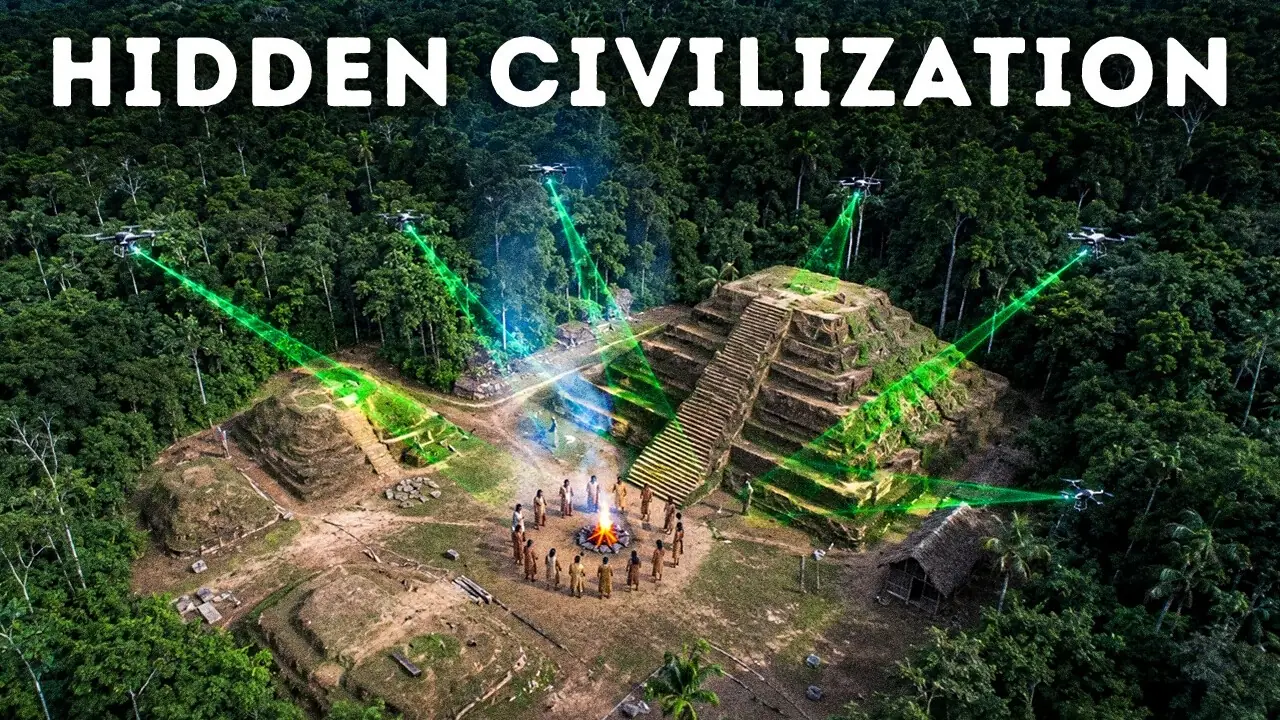
AI-composited scenes, bold caps text, and dramatic lighting have become the visual signature of the automated mystery and history niche. The format still works. The channels doing it purely on autopilot, with no editorial hand on the script, are the ones losing ground.
Honest take: if your plan for a cash cow channel is zero ongoing involvement from day one, budget for a slower ramp and a lower ceiling than the course sellers promise. The channels still growing in this space have a real person making script and pacing decisions, even if AI produces the footage and voice.
The Three Production Models
Every cash cow channel runs on one of three production setups, and the right one depends on how much cash you have versus how much time.
| Model | Cost per video | Owner time per video | Best for |
|---|---|---|---|
| AI-only | $2 to $5 | 60 to 90 minutes | Testing a niche cheaply before committing real money |
| Fully outsourced | $80 to $240 | 30 to 60 minutes | Higher production quality once a niche is proven |
| Hybrid | $5 to $15 | 20 to 30 minutes | Most operators, AI handles production, a paid human edits and reviews |
The hybrid model is the honest middle ground for most people starting out: AI tools handle the mechanical production work, and a paid script pass or edit review catches the templated, generic quality that costs a pure-AI channel its retention. The cost difference between hybrid and pure AI is small. The retention difference is not.
Breakeven math keeps this honest. In a low-RPM evergreen niche paying $1 to $3 per 1,000 views, a $2 to $5 AI-only video needs roughly 700 to 5,000 views just to cover its own production cost, before it contributes anything to income. A $150 outsourced video in the same niche needs 50,000 views or more. That gap is why the AI-only and hybrid models are where most people should start testing a niche, not the fully outsourced one.
What Realistic Income Looks Like
Skip any number that is not tied to a niche and a country. Both move the outcome by 10 times or more. Evergreen faceless niches mostly sit in the low-to-mid RPM range, covered in full in the YouTube RPM guide and the YouTube CPM guide. The 1-million-views breakdown shows exactly what that scales to at volume.
Model your own numbers before you commitPlug in your niche, audience country, and expected views and the free Money Calculator estimates real income instead of a guessed range. No signup.Try the Money Calculator →The honest framing: a single cash cow channel at modest views in a mid-RPM niche produces a few hundred dollars a month. A portfolio of three to five channels, each with a real production process behind it, is what turns that into a meaningful income. That takes months of consistent output per channel, not a weekend setup.
Ad revenue is rarely the ceiling once a channel proves out. Affiliate links, sponsorships, and digital products routinely add more than ads alone at scale, covered in full in the YouTube as a business guide and the sponsorships guide. Build the ad-revenue base first, it is what proves the channel is worth diversifying.
Scaling to a Portfolio
The single most common failure mode is starting three channels at once before any of them is proven. Build and stabilize one channel first. Write down the process as a real procedure before you add a second channel or hire anyone: the script structure, the thumbnail style, the upload cadence. A process you cannot hand off in writing is not systematized yet. It just has not broken while you were the only one running it.
Every channel in the portfolio needs its own monetization eligibility. There is no shortcut here: each channel independently needs 1,000 subscribers and 4,000 public watch hours in 12 months, or the Shorts equivalent, before it earns a cent of ad revenue. The full requirements are in the YouTube Partner Program guide.
Staying Compliant
The line YouTube enforces is reused and repetitive content, not AI tools themselves. Uploading templated scripts with minor variation, reusing the same narration structure across dozens of videos, or republishing content with no original commentary or editing is what triggers the inauthentic content policy. Detection now runs at the channel level, not just per video, so a portfolio built entirely on the same formulaic pattern is a bigger risk than any single upload. The faceless channel ideas guide covers this rule in full, including exactly what separates a compliant faceless channel from one that gets flagged.
A separate rule applies specifically to realistic AI video: YouTube requires creators to disclose when AI generates or meaningfully alters photorealistic scenes, footage depicting real events, or content that makes it look like someone did or said something they did not. This does not cover an AI voice narrating over real stock footage, that combination does not require the label. It applies to fully AI-generated photorealistic video, the kind common on automated mystery and history channels. Disclosure is a checkbox in YouTube Studio's upload flow, and disclosed content is not penalized, only undisclosed AI content that YouTube detects risks a manually applied label or Partner Program penalties.
Frequently Asked Questions
What is a cash cow YouTube channel?
A channel built to generate steady revenue with minimal ongoing creative input from the owner. It is usually faceless, sits in an evergreen niche, and runs on a repeatable production process rather than personality-driven content. The defining trait is not the niche, it is that the owner is not the bottleneck, and production can scale through contractors, AI tools, or both.
Are cash cow YouTube channels still profitable in 2026?
The niche and format still work, but the pure-automation version is getting squeezed. YouTube's algorithm now weighs session duration and viewer satisfaction more heavily, and it has gotten measurably better at filtering low-effort, mass-produced content. A hybrid model, AI for efficiency plus real editorial judgment on script and pacing, is what still performs.
Is it against YouTube's policies to run an AI-generated cash cow channel?
Not automatically. YouTube's policy targets inauthentic and repetitive content, mass-uploading duplicate or reused videos with no original commentary, narration, or editing, not AI tools themselves. A channel using AI narration or stock footage with a genuinely original script and edit is treated differently than one republishing the same content pattern at volume.
How much does it cost to produce a video for a cash cow channel?
Roughly $2 to $13 per video depending on the production model. A pure AI-generated video (script, voiceover, and assembly tools) runs closer to $2 to $5. Outsourcing a scriptwriter, voiceover artist, and editor separately runs $80 to $240. A hybrid model, AI tools with a paid human editor for quality control, typically lands between $5 and $15.
How many channels can one person run at once?
Most operators who scale successfully build and stabilize one channel before starting a second, then add channels only once the first has a documented, repeatable production process. Running three to five channels simultaneously from day one, before any single channel is proven, is the most common reason new cash cow operations fail.
Does each channel need its own 1,000 subscribers and 4,000 watch hours?
Yes. YouTube monetization eligibility is per channel, not per person or per business. Every channel in a portfolio has to independently clear 1,000 subscribers and 4,000 public watch hours in 12 months, or the Shorts equivalent, before it earns ad revenue.
What is the difference between a cash cow channel and a faceless channel?
Faceless describes the format, no on-camera presence. Cash cow describes the business model built on top of that format: an evergreen niche, a repeatable production process, and often a multi-channel portfolio designed to generate revenue without the owner as the daily bottleneck. Every cash cow channel is faceless, but not every faceless channel is run as a cash cow operation.
Can you sell a cash cow YouTube channel?
Yes, monetized channels with a stable upload history and revenue trail do get sold on marketplaces built for this, typically valued as a multiple of monthly net revenue. Buyers scrutinize traffic sources and content originality closely, since a channel built on reused or low-effort content is a much riskier purchase.
The Model Still Works, the Shortcut Does Not
Cash cow channels are a real, still-viable way to build revenue outside a personality-driven channel. What changed is not the model, it is the ceiling on the fully hands-off version of it. The channels still growing in 2026 treat this as a production business with a real person making editorial calls, not a set-and-forget automation loop.
Pick one niche, build a real process around it, prove it, then scale. Skip the part where you run five unproven channels before one of them works, that is the shortcut costing people the most money right now.